What wikipedia can’t tell you about planning a homeschool year for your young kids
Every parent’s fear in homeschooling is that they won’t be good enough, they’ll fall behind, or somehow fail. And at the beginning of the school year, planning can be completely overwhelming.
But it doesn’t have to be.
Last minute running around and making sure you’re prepared will always bring some stress, especially if this is your first year like me to have a formal homeschooling day. But one thing the classroom taught me was that no matter how much I planned, things still changed.
And I have brought some of those lessons into the home.
In years past, we have done tot schooling and home preschool, even detailing learning objectives for 3 year olds. So we’ve been here before.
It’s just now we are doing a full curriculum and school day every single day! And with young kids, getting them into the swing of things can be the hardest part.
7 habits of successful homeschooling moms
It doesn’t matter if you made your own or purchased a curriculum, there are themes to every homeschooling day that remain the same. There are objectives beyond book smarts that we can tap into as parents teaching our kids.
Links included throughout to our recommended materials on Amazon and to my own own shop (where many things are also free!) Thank you for supporting us.

Set a Schedule
The best way to set yourself up for a successful day of homeschooling is to have a schedule. It doesn’t have to be a strict schedule, but creating a routine will help your child know how the day will go. Here’s an example schedule to help you get started:
- 9:00 – Discussion Time (weather, what’s on the agenda for the day)
- 9:15 – Read Aloud
- 9:30 – Math Activity
- 10:00 – Snack & Break
- 10:30 – Science Activity
- 11:00 – Language Activity
- 11:30 – Lunch and Play Time
- 1:00 – Quiet Rest Time
- 6:00pm – Dad gets home, sing a Spanish song!
Go with the flow of your child’s attention span. If they can maintain focus a little longer, you can make some of the activity times longer. If they are easily distracted, you can break up activity time with educational play time.
Adjust it to meet the needs of your family. So say your kids wake up at 6am or they sleep in until 10am, tweak it! Maybe your working husband is going to do a lesson a day and you’ll do it after dinner every night.
Make your schedule workable and unique to you.
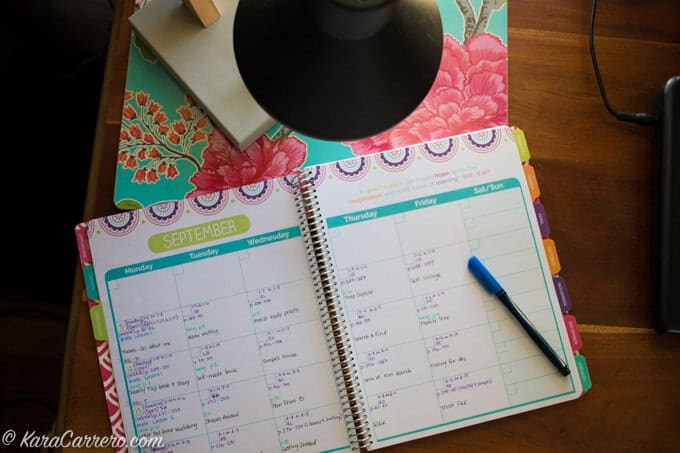
Check out what I use and recommend as the best homeschool planner… it’s not dated!
Have a Set Area
If possible, try to have a set area for learning. This will help your child focus better when they recognize that being in that area is school time. It doesn’t matter if you have zero extra space (like us), but just that they know where to go, even if it’s just the dining room table! 
Do Hands-On Activities
Break up your child’s focused reading or writing time with hands-on activities that will help them learn but also entertain them. For instance, baking is a great way to teach math skills and something fun for your child.
Print our Pre-K and Kindergarten Outcomes and Learning Objectives for free.
Read
If your child is not yet reading on their own, read to them.
Find books that really interest them to help keep their attention. If your child has started reading, get them to read to you. Reading is the best way to set them up for success in their future learning endeavors.
In addition to our main curriculum, we are doing weekly learning themes that encompass all subjects and part of it is that we have at least one thematic book a day. Do something similar if needed and it might even get your family on a once-a-week library outing.
Sing & Dance
This gives them an appreciation for music with play time that involves singing, dancing and making music. Plus some of the best ways that kids (and even adults) learn is through play. This is also a great way to build their coordination skills.

Follow Their Interests
This is the best part of homeschooling.
You can take time to focus on your child’s interests. If they are curious about animals, take time to read books about them, do crafts, and take a field trip to the pet shop or children’s museum.
Learning becomes fun when you follow their interests.
This also means don’t be married to your lessons plans!
You might have to spend extra time on a topic or save something for later. I learned very early in my teaching career that I couldn’t plan too far in advance because the need of the student came first.
Don’t Worry!
Don’t worry about all the little details.
You won’t cause your child any irreversible damage.
As long as you’re reading, playing, and focusing on your child’s needs, you’ll be fine.
Get my free homeschooling mini series!
Includes encouragement, 6 printable pages in PDF form, and 3 helpful classes to both help and encourage you your homeschooling journey.

More homeschooling resources


For members and supporters
Get access to the Download Dashboard
Printable PDFs in course format for history, literature, and cross-curricular studies. Download what fits your students, print it, and start teaching.
- Course-style PDFs. Structured, ready-to-print studies that guide students from the first page to the last.
- Grab what you need. Choose the studies that fit your students and download them from one dashboard.
- New downloads as it grows. More are added over time, so there is always something new to print.
$5 a month
See what is inside Already a member? Open your dashboardPrefer to start free? Many challenges also arrive as simple emails when you subscribe.