
The Tuning Fork
Thesis Method
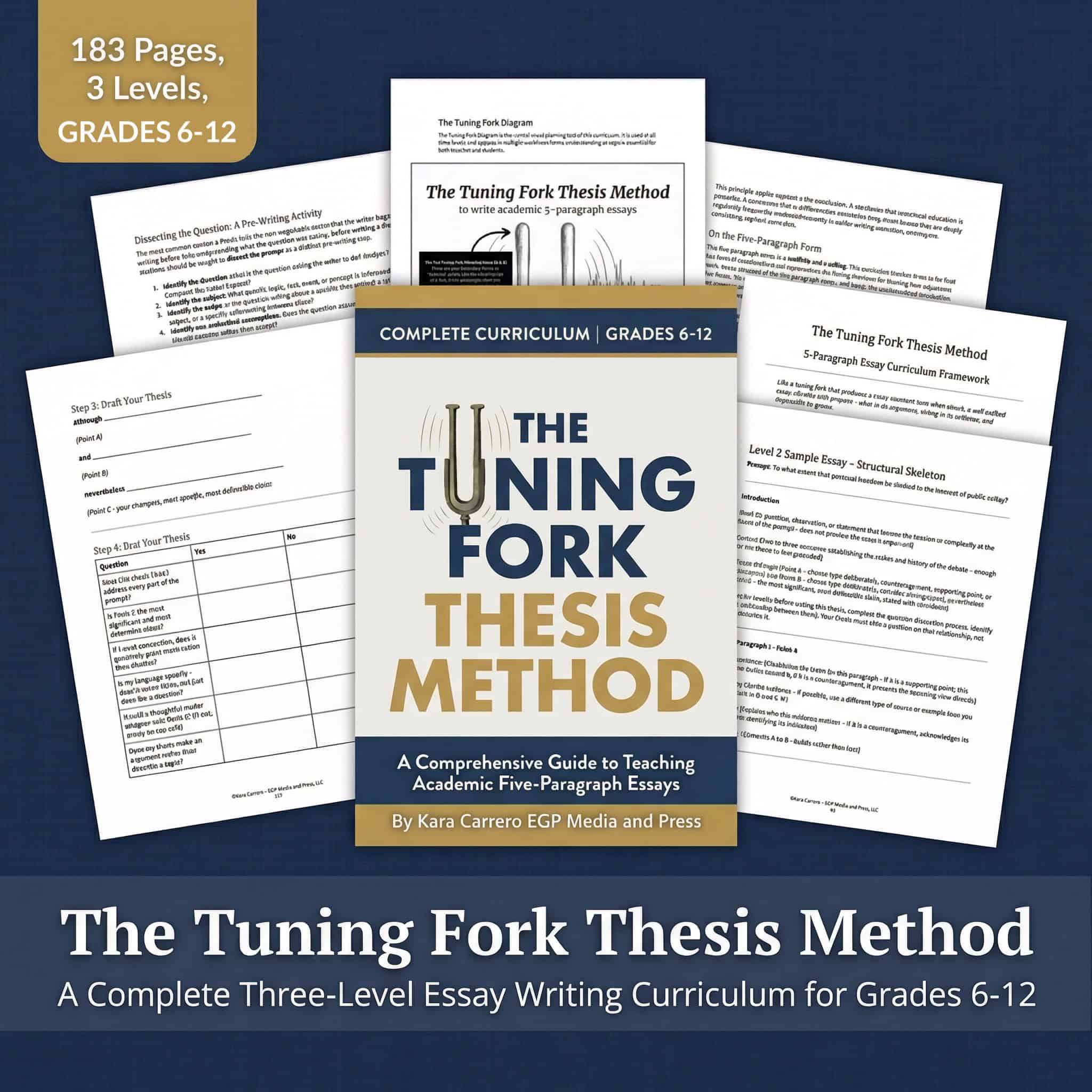
A 183-page, three-level curriculum built around one central idea: a strong thesis does not just state a position. It creates tension, holds competing ideas in balance, and resolves them with a clear argument.
You have said it more than once: "You need a stronger thesis."
They nod. They try again. It is still vague. Still a fact with no argument underneath it.
Vague is not a revision.
Vague is a missing framework.
Most students can write a sentence about their topic. They know what the essay is about. What they cannot do is build a real argument from it, something specific enough to prove, interesting enough to defend, and clear enough to hold every paragraph accountable.
That is not a motivation problem. It is not a laziness problem. It is a toolbox problem. No one has ever given them a framework they could feel and repeat, one that makes the difference between a thesis and a topic sentence obvious and transferable to every subject they write in.
What they need is not another prompt telling them to "take a position." They need a method. Something that makes a strong thesis click into place the same way it does for students trained in competitive debate: because it is precise, arguable, and built to withstand a challenge.
When a tuning fork strikes,
everything else falls into tune.
A tuning fork does one thing with extraordinary precision: it vibrates at a single, unwavering frequency. Hold it next to anything out of tune, and the difference is immediate. Strike it, and the room adjusts to it.
A strong thesis statement works the same way. It is not a general statement about the topic. It is a precise, arguable claim that every paragraph answers to. When it is sharp, the rest of the essay knows exactly where it stands. When it is fuzzy, nothing holds together, no matter how good the individual sentences are.
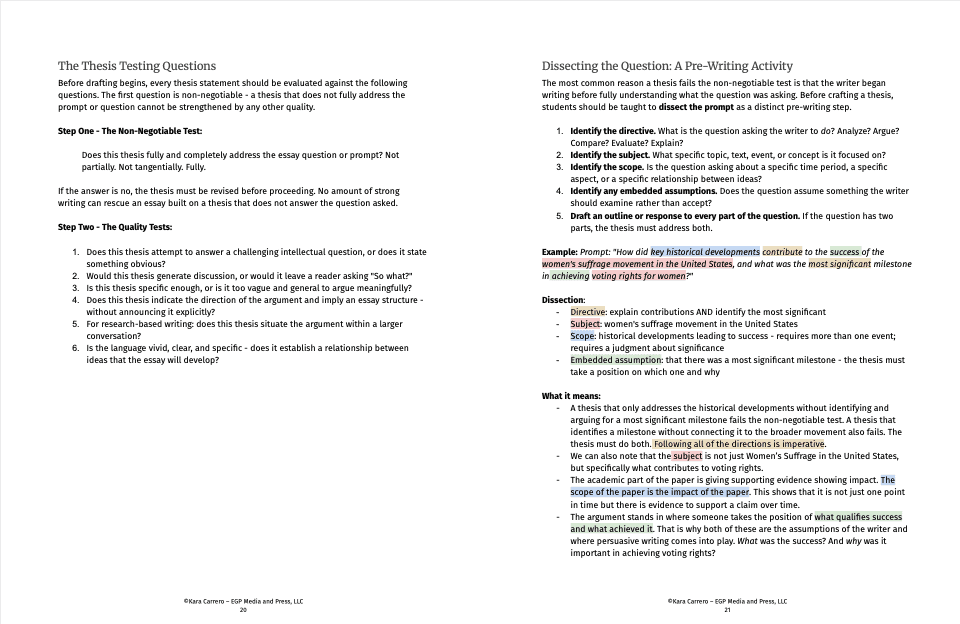
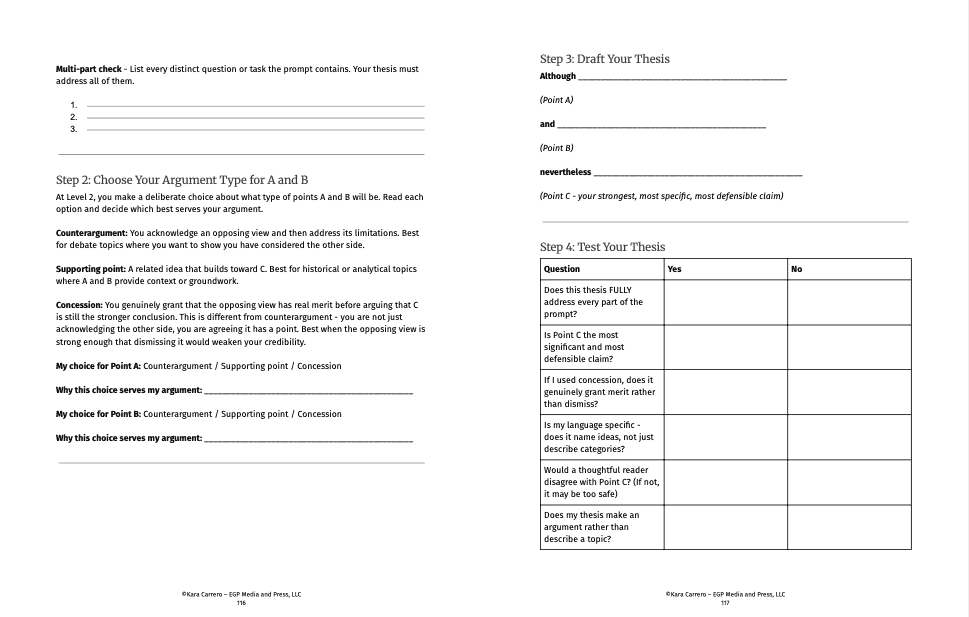
The Tuning Fork Thesis Method gives students a system for getting there: from understanding what a thesis is actually supposed to do, to testing whether theirs is doing it, to revising with specificity instead of hoping the next draft lands better.
Learning that sticks because
it is built to be remembered.
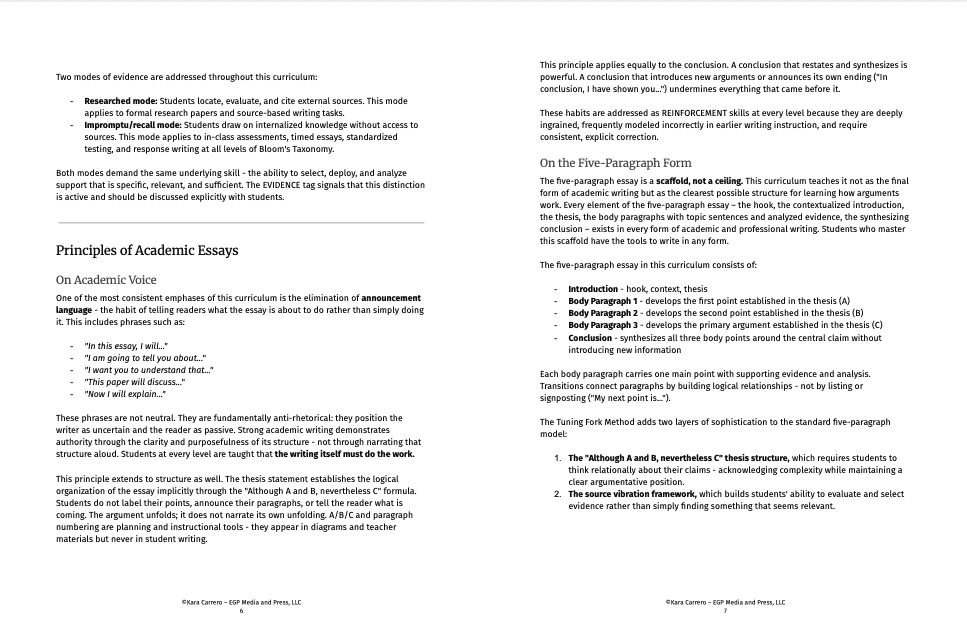
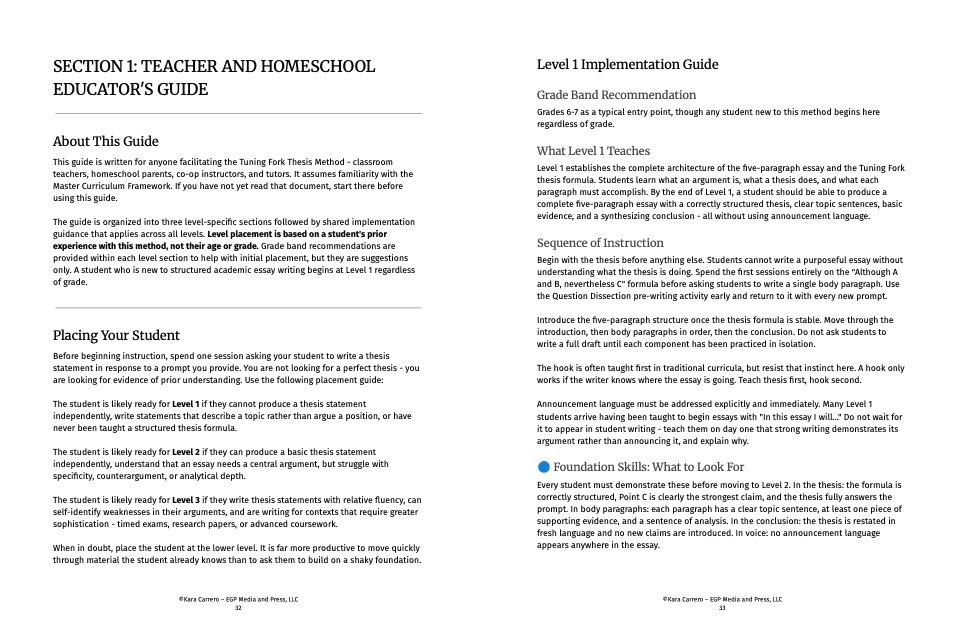
This is not a packet of prompts. Every part of the curriculum is designed around the idea that students learn to write by writing with a framework they can internalize, apply, and return to on any assignment, in any subject.
See what your student
will actually be doing.
You do not have to be an English
or history teacher to use this.
- Homeschool families who want to teach analytical writing without overhauling their entire language arts approach
- Classroom teachers who need one framework they can teach once and reference across every writing assignment, all year
- Co-op instructors running a dedicated writing class across mixed grade levels (the three-level structure makes that practical)
- History and science teachers whose students write summaries dressed up as essays and need to understand the difference
- Students preparing for dual enrollment, AP coursework, standardized testing, or college application writing
- Any educator who wants their students to walk away with a skill, not just a completed assignment
This method comes from
a real classroom.
Kara Carrero was a high school classroom teacher of College-Prep history and holds a secondary English certification. That combination mattered. In history, students write arguments constantly: about causes, consequences, and competing interpretations of events. In English, they are expected to build a clear, analytical claim and defend it across every paragraph. Both rooms have the same problem. Students who could talk through an idea clearly could not get a defensible thesis on the page.
Coaching speech and debate sharpened how she thought about that problem. In competitive debate, vague is not a revision. It is a negative concession. Students learn to build arguments that can withstand direct opposition, and the thesis is where it either holds or falls apart. That precision shaped everything about how she teaches written argument.
She received a Da Vinci Institute award for creative teaching strategies, a recognition that grew out of the same instinct that drives her curriculum work: that students retain and apply what they learn through frameworks that are concrete, memorable, and built for real use. The Tuning Fork Thesis Method is that kind of framework. It is the system she developed through years of watching students at different ages and skill levels figure out what it means to make a claim and hold it steady.
She now homeschools six children and builds curricula through EGP Media and Press for classrooms, co-ops, and families who want the same rigor she brought into the classroom, without needing a degree in English to deliver it.
Give your student a framework
that holds.
183 pages. Three levels. One method that works across history, literature, science, and beyond.
Add to Cart
Questions? Reach out at karacarrero.com