
What If the Stories
We Tell About 1776 Are Wrong?
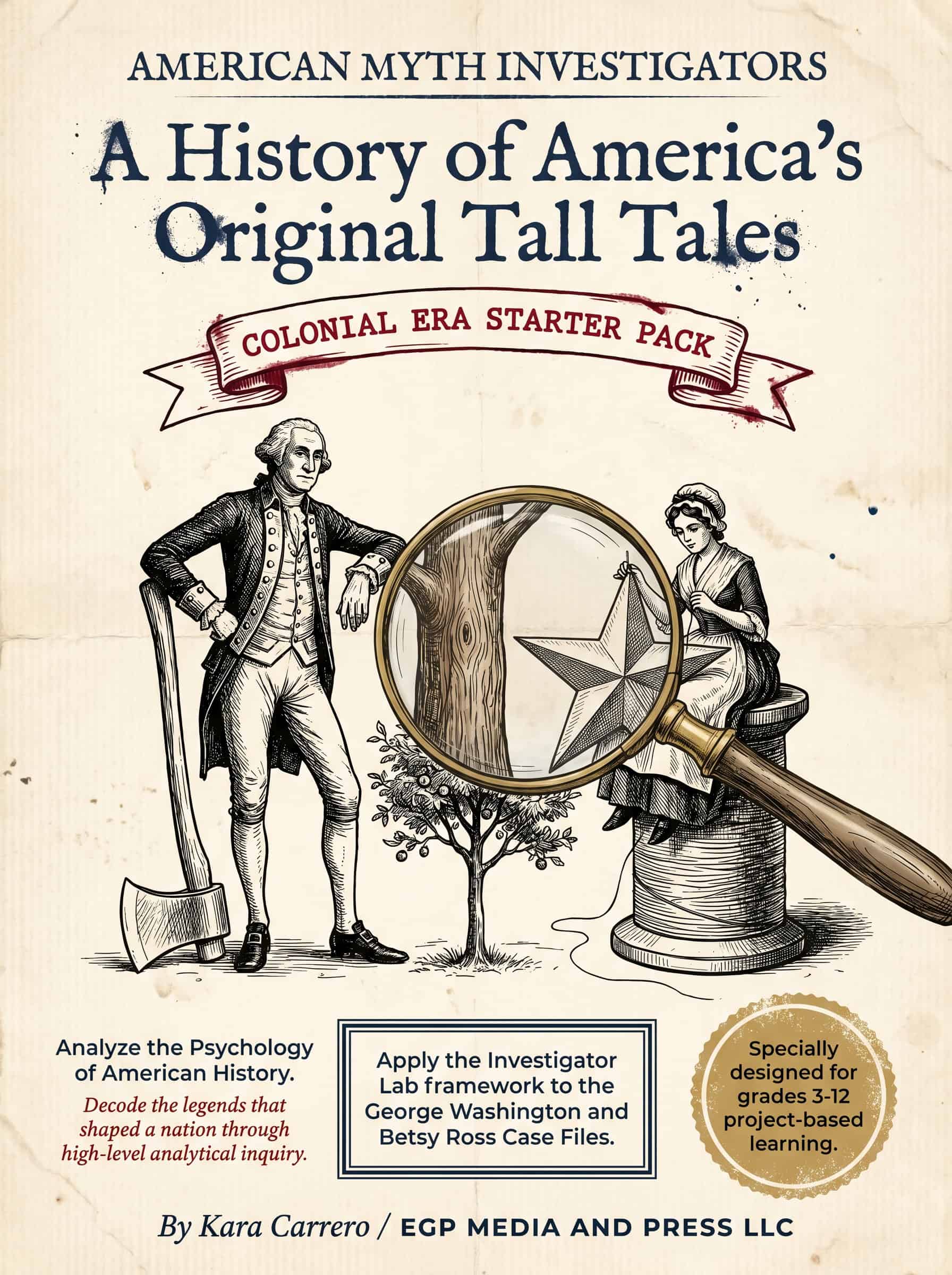
American Myth Investigators puts students in the role of historical detectives, investigating the Washington and Betsy Ross stories we've repeated for generations and asking the one question that changes everything: why did we need the story to be bigger than the truth?
The Stories We Tell About the Founding
George Washington and the cherry tree. Betsy Ross sewing the first flag at Washington's personal request. These are the stories that get passed down, repeated in textbooks, and retold at kitchen tables every July.
Most of them are wrong. Or at least, far more complicated than the version we've been telling. And that complexity is exactly where the best historical thinking lives.
A myth doesn't have to be a lie to be worth investigating. Sometimes a story becomes a myth because we needed it to be true. Understanding why we tell a story the way we tell it is one of the most powerful questions a student can learn to ask.
The Two Cases Students Will Investigate
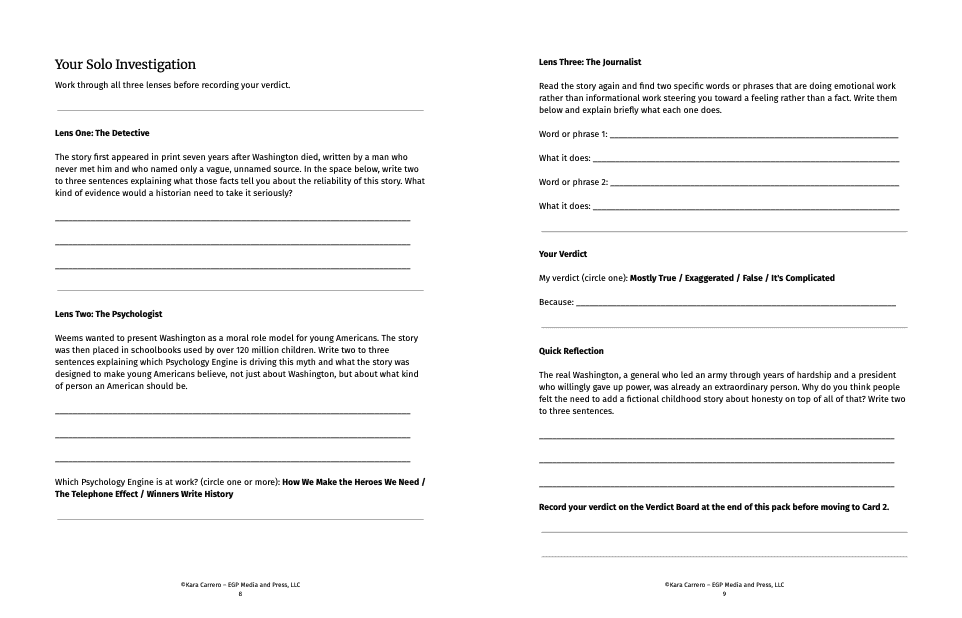
Students work through 2 complete myth cases, each structured as a case file. Using the Solo Investigator role, they examine each story through three analytical lenses before recording a verdict and responding to a final reflection question.
The Two Case Files
George Washington and the Cherry Tree: Where did this story come from, who wrote it down first, and why did a new nation need a founding father who could not tell a lie?
Betsy Ross and the Flag: What is the actual historical evidence for this story, and why did it take nearly 100 years after the Revolution for it to surface?
Each case is examined through three lenses: the Detective (what does the evidence actually say?), the Psychologist (why did people need this story to be true?), and the Journalist (how would you report this honestly?). That combination is what makes this a thinking activity, not just a reading one.
What's Inside
2 Complete Myth Case Files
One for George Washington and the Cherry Tree, one for Betsy Ross and the Flag. Each is a structured case file with evidence, context, and questions built in.
Solo Investigator Role Card
Students work through each case using three analytical lenses: the Detective, the Psychologist, and the Journalist, examining evidence, motivation, and honest reporting.
Introduction to the Three Psychology Engines of Myth
A student-facing introduction that explains why myths form and stick, giving students the conceptual framework before they begin investigating.
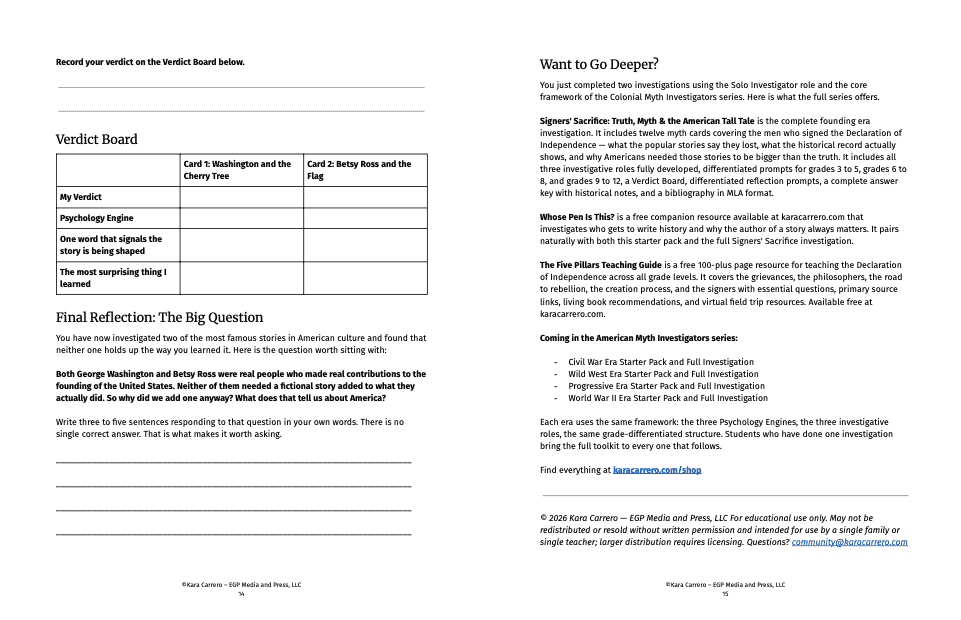
Verdict Board and Final Reflection
Students record their verdicts on a 2-card Verdict Board and respond to a final reflection prompt connecting both cases to the bigger question of why nations tell the stories they tell.
Teacher Note
Brief implementation guidance so this works equally well as a standalone activity, a preview lesson, or a co-op discussion starter. No prep beyond printing required.
30–45 Minutes, Grades 3–12
Short enough to fit in a single session, differentiated enough to work across a wide age range. A genuine introduction to the American Myth Investigators framework.
A Good Fit For...

Families preparing for July 4th who want to go deeper than fireworks and parades and give students a real encounter with the founding era before the anniversary arrives.

Homeschool families and co-ops studying American history who want primary source thinking and analytical frameworks, not just dates and names to memorize.

Multi-age households who need one resource that gives every child something to work with, from the student who is just beginning to understand what a primary source is to the one who can argue a thesis.

Classroom teachers and summer enrichment programs looking for an engaging, discussion-ready unit that connects to the 250th anniversary without requiring extensive prep time.