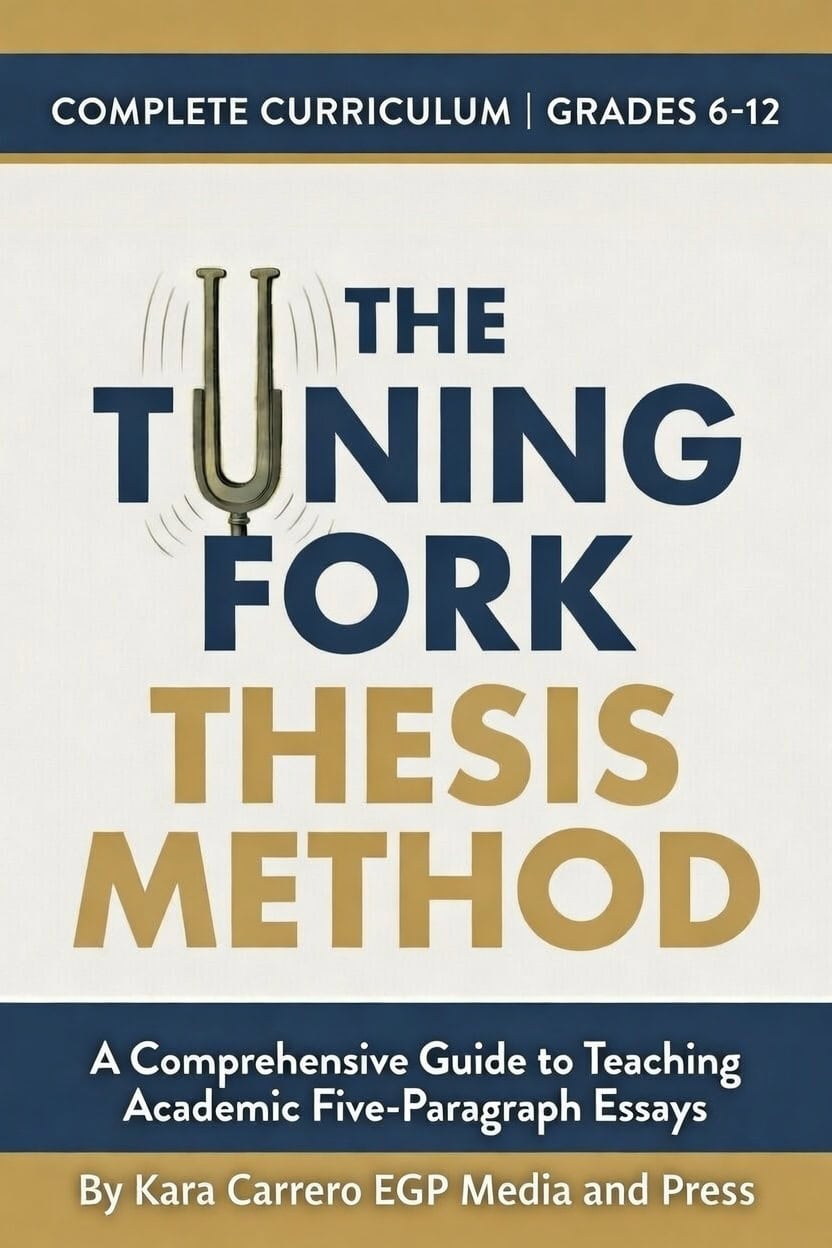
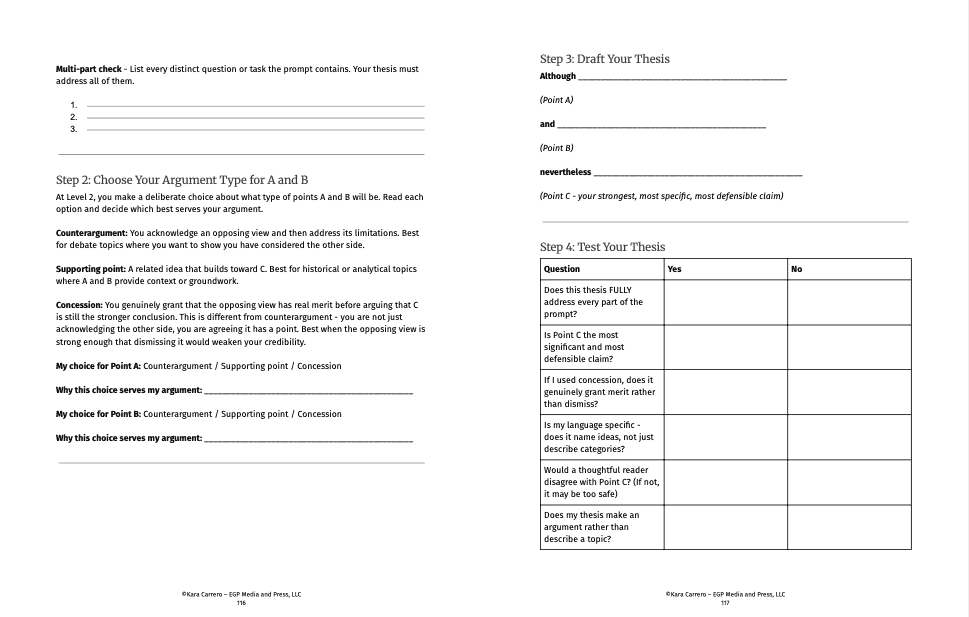
The Tuning Fork Thesis Method: A Complete Essay Writing Curriculum
$27.00
A 183-page, three-level essay writing curriculum built around one central idea: a strong thesis doesn’t just state a position, it creates tension, holds two competing ideas in balance, and resolves them with a clear argument within a 5 paragraph essay (and any academic paper). Students at every level learn to write with precision, authority, and purpose.
Description
Most essay writing instruction teaches students what an essay looks like. The Tuning Fork Thesis Method teaches students what an argument does.
The curriculum is built around the “Although A and B, nevertheless C” thesis structure: a formula that requires students to think relationally, acknowledge genuine complexity, and defend a clear position rather than simply restating a topic. Like a tuning fork that produces a clear, resonant tone when struck, a thesis built this way vibrates through every paragraph of the essay.
The method works across all subjects, including history, literature, science, and social issues, and is designed to be used by homeschool educators, co-op teachers, and classroom teachers without requiring a separate teacher’s guide or prep-heavy lesson plans.
Three levels of Thesis Writing & Crafting a 5 Paragraph Essay, genuinely differentiated:
➔ Level 1 (Structure and Foundation): Students learn what an argument is, what a thesis does, and what each part of an essay must accomplish. The emphasis is on form, clarity, and the basic habits of academic voice.
➔ Level 2 (Complexity and Control): Students work with more difficult material, including nuanced thesis statements, multiple types of evidence, counterargument, concession, and more demanding analytical expectations.
➔ Level 3 (Sophistication and Purpose): Students write for real stakes and real audiences, including timed exams, college applications, debate, and the kind of complex, layered argumentation that characterizes advanced academic writing.
Levels are based on prior experience with this method, not age or grade. A student encountering the Tuning Fork Method for the first time begins at Level 1 regardless of their grade.
What’s inside the 183 pages:
➔ Complete scope and sequence for all three levels
➔ The “Although A and B, nevertheless C” thesis formula with guided practice at every level
➔ Color-coded skill classification system (Foundation, Reinforcement, Extension, Application) used consistently across all levels
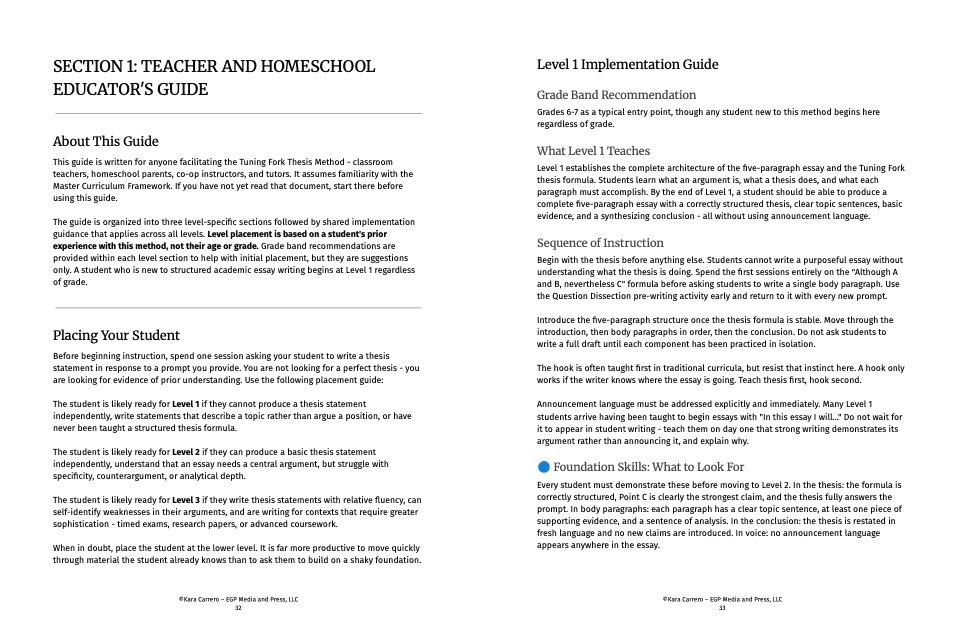
➔ Pacing guides: 3 weeks for Level 1, 6 weeks for Level 2, 10 weeks for Level 3
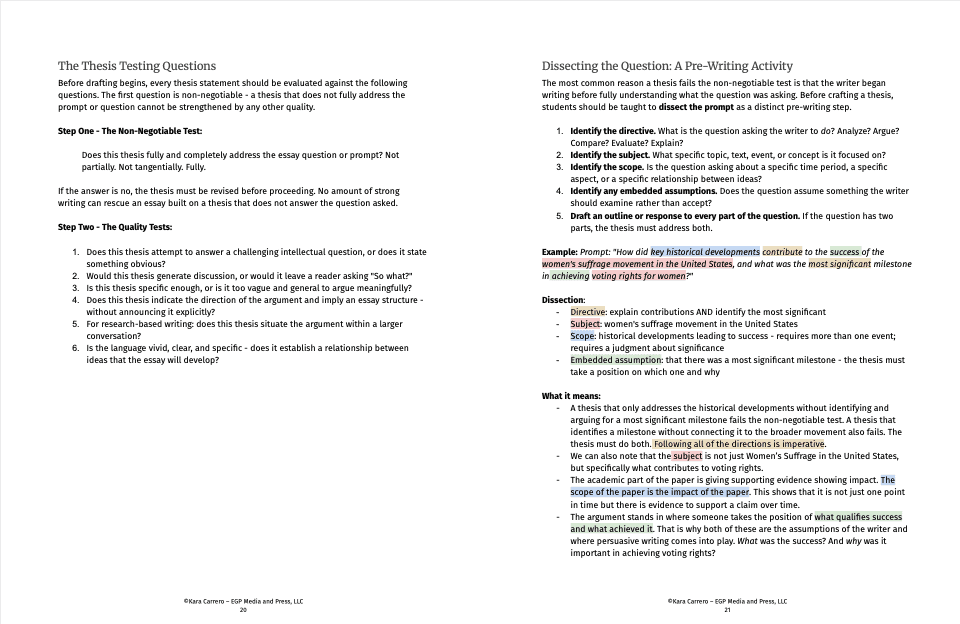
➔ Student worksheets and teacher conference notes for every major skill
➔ Evidence framework covering both researched writing and impromptu/recall writing (timed essays, assessments, standardized testing)
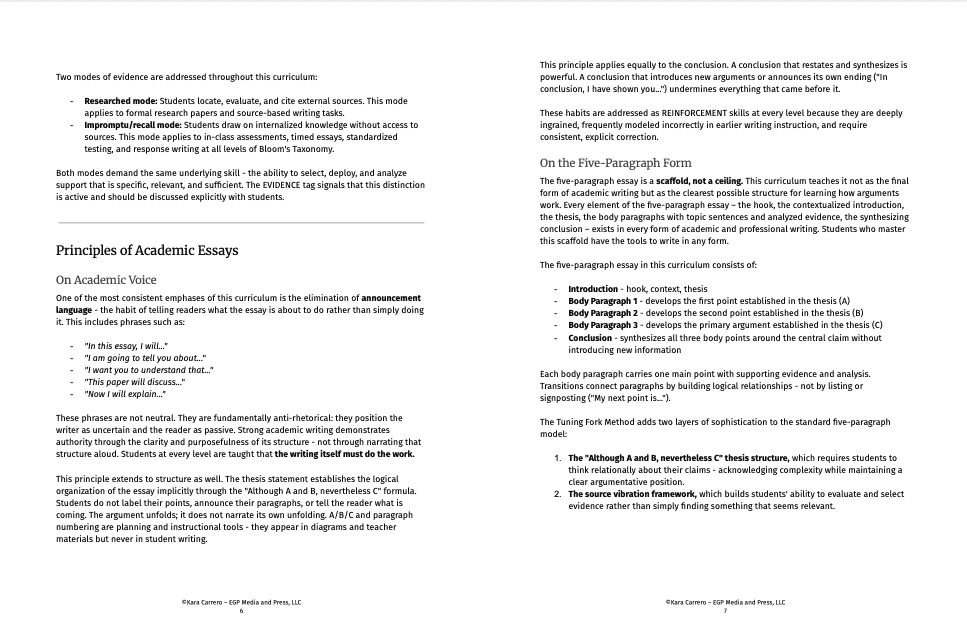
➔ Academic voice training: how to eliminate announcement language and write with authority at every level
➔ Suggested sample topics across history, literature, science, and social issues
Find Your Starting Point
This curriculum is written for any educator looking to improve their students’ English and History papers. This includes homeschool educators, co-op writing teachers, and classroom teachers working with students in grades 5 through 12. It is also the right fit for students preparing for dual enrollment, standardized testing, or any writing-intensive academic context.
Because levels are based on experience with this method rather than grade or age, the curriculum meets students where they are rather than where the calendar says they should be.
Meet Your Student Where They Are
➔ Ages 10 to 12 (grades 5 to 6): Strong readers and thinkers who have done some structured writing but have not worked with formal argument or thesis structure yet. Begin at Level 1. Expect to move slowly and revisit Foundation skills more than once.
➔ Ages 12 to 14 (grades 7 to 8): The most common entry point for Level 1. Students this age can grasp the “Although A and B, nevertheless C” structure quickly and are developmentally ready to think relationally about ideas. Students who have already had structured writing instruction may test into Level 2.
➔ Ages 14 to 16 (grades 9 to 10): Students new to this method start at Level 1 and move through it faster than younger students, often completing Level 1 and moving into Level 2 within the same school year. Students with prior essay instruction that emphasized structure but not argumentation are a strong fit here.
➔ Ages 16 to 18 (grades 11 to 12): Level 3 is designed for this range. Students writing college application essays, preparing for AP exams or dual enrollment coursework, or entering speech and debate will find Level 3 directly applicable to the writing they are already doing.
Right Level, Right Student
➔ Students who can fill in an essay outline but cannot explain why their thesis matters
➔ Students whose writing sounds flat or formulaic even when it follows the rules
➔ Students preparing for timed writing, standardized testing, or college-level work
➔ Families who want a complete writing curriculum that does not require a separate teacher’s guide or extensive prep time
➔ Co-ops running a dedicated writing class across mixed grade levels (the level system makes mixed-age teaching practical)
This is not the right fit if your student is still working on paragraph-level writing, sentence construction, or basic grammar. The Tuning Fork Method assumes students can write a coherent paragraph before they begin. If that foundation is still developing, address it first and return to this curriculum when they are ready.
For members and supporters
Get access to the Download Dashboard
Printable PDFs in course format for history, literature, and cross-curricular studies. Download what fits your students, print it, and start teaching.
- Course-style PDFs. Structured, ready-to-print studies that guide students from the first page to the last.
- Grab what you need. Choose the studies that fit your students and download them from one dashboard.
- New downloads as it grows. More are added over time, so there is always something new to print.
$5 a month
See what is inside Already a member? Open your dashboardPrefer to start free? Many challenges also arrive as simple emails when you subscribe.
Additional information
| Activity Type | |
|---|---|
| Grade Range | |
| Subject |


Reviews
There are no reviews yet.