Why teaching life skills matters more in the toddler and preschool years
Back when my sweet Emma was not quite 2, I found her in the kitchen mopping up pomegranate juice that she had spilled happily exclaiming “Pom Pom!” as she worked.
I didn’t ask her to wipe up her mess, but it was important to her to get it fixed and cleaned. She had seen her sister do it a million times. And she had heard me request towels for spills over and over in her lifetime.
And it hit me… not only do life skills matter but they are intentional daily actions and parenting moments that are important even in toddlerhood.
It was absolutely nothing to her to clean up that spill, she enjoys running things to the trash, and even before her second birthday this girl will help delivery dirty laundry to the basket with a joyful heart.

5 Important Life Skills Your Child Should Know
We want our kids to be able to take care of themselves when they head out into the world so it’s important to prepare them when they are young. Because then it becomes second nature when they’re pre-teens and teenagers looking at what they’re going to do with their life.
As hard as it may be, we need to stop over-helping them and teach them how to do things on their own so the world and the future don’t seem as daunting to them.
Therefore it’s never too early to start. But also never too late either.
Place their order at a restaurant.
Children should be able to politely and effectively communicate their order to a restaurant server, even when they’re young.
My oldest, Jenn, typically “turtles” up when asked to say something to someone she doesn’t know. While there’s something to be said for developing a healthy respect for keeping boundaries with strangers, it is also important for her to learn proper social cues and interactions.
So we’re trying to enforce this more. That if she wants to eat, she needs to participate in the process of ordering.
Have them look the server in the eye and remember to say, “please” and “thank you.” If they have a special request, let them know that they need to let the server know. Having the confidence to speak up for what they want is a skill they’ll always need.
Read more on manners to teach young kids beyond “please” and “thank you”.
Do their own laundry.
…or at least go through the motions to learn. yes, even with preschoolers!
Young kids are able to do chores and laundry is one of the best ways to teach them to be independent. They will need some supervision at first, but it won’t take them long to get it. Show them how to properly sort their clothes so they don’t end up with pink underwear.
Show them how the washer and dryer works and watch to make sure they understand what they need to do. Once you’re confident that they know how to do it on their own, give them the space and independence to take care of it themselves.
Get more ideas on life skills that end the entitlement attitude in children.
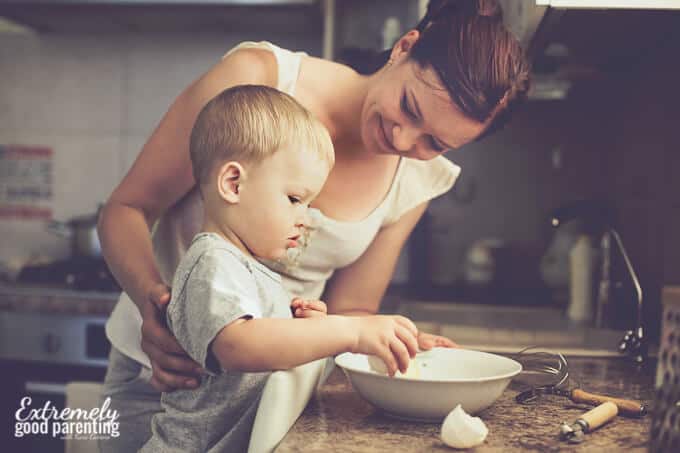
Teach them to (help) cook.
They may not be ready to use knives or the oven without adult supervision (though you can still let them explore these skills safely), but there are plenty of kitchen skills they can still learn. Teach them how to make a snack that is easy for them to mix and assemble. There are so many great cookbooks for kids that you can find on Amazon.
Let them choose a recipe they like to try out. Teach them to bake. Using measuring cups and spoons will help them with their math skills and teach them to properly measure for a recipe. The more they are able to do, the more confident they will become.
Related: Why kids get hurt by knives and fire: how to prevent disaster
Have them stand up for themselves.
If your child is having trouble with a teacher, friend, or even neighbor talk to them about how to handle it themselves without you stepping in. One day they will be on their own and they will need to know how to address these issues for themselves.
If they feel they were treated unfairly, talk to them about how they can approach the issue and what they should say. Tell them to be respectful but ask why they were treated the way they were. Teach them to listen openly to the response they get so they can understand what they need to change in the future.
Read more about helping our kids learn to respectfully disagree.
Pitch in to be a part of the family team.
Kids should learn how to contribute around the house.
When they are grown, this is an important skill that will carry over to their job. Set them up with a list of chores they can easily handle like setting or clearing the table, watering the plants or picking up the toys in the playroom.
Teach them the importance of helping out other people. If a sibling needs a little extra help, teach your child it’s important to help out when someone else isn’t able to get something done. The help will come back to them when they need it.
Download your customizable routine and chore charts for kids
It’s 17 pages and includes a guide for how to use it most effectively. There are also several pictures, chore puzzles, and even contracts to sign with your kids. Yes, we even did this as young as three! It’s both written and includes visual cues as well, making the whole packet of routines and chore charts fully customizable.
Click the preview image to snag your copy today!

For members and supporters
Get access to the Download Dashboard
Printable PDFs in course format for history, literature, and cross-curricular studies. Download what fits your students, print it, and start teaching.
- Course-style PDFs. Structured, ready-to-print studies that guide students from the first page to the last.
- Grab what you need. Choose the studies that fit your students and download them from one dashboard.
- New downloads as it grows. More are added over time, so there is always something new to print.
$5 a month
See what is inside Already a member? Open your dashboardPrefer to start free? Many challenges also arrive as simple emails when you subscribe.