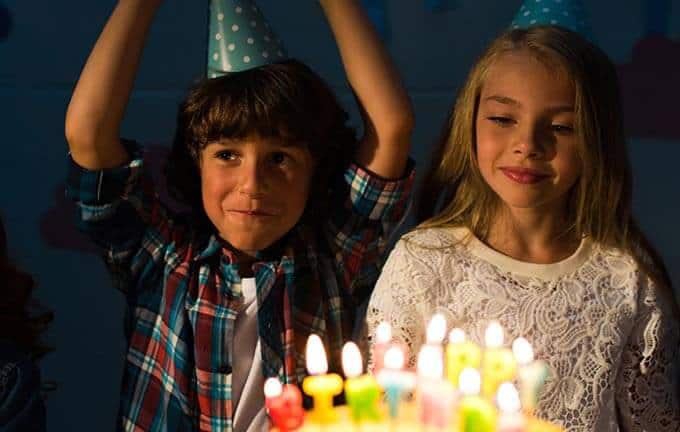
How to handle your child’s disappointment on their birthday
I was 7. It was my first sleepover. And it was all Barbie. It should have been a dream but all I remember is the sheer horror of watching my 12 closest friends trample through my brand new poster, unintentionally ripping it to shreds. It was my birthday, and I was the one crying.
Fast forward a couple of decades and it’s been repeated over with my own daughter, Jenn. She was the only one to cry at her beautiful painting party. The only one to get upset. The only one to lash out with those angry suppressed feelings and big emotions we don’t often see lurking on the inside.
And I have seen this disappointment cycle on repeat for every one of the kindergarten birthday parties we’ve been to this year.
Why?
Failed expectations.
The only person arriving to any birthday party with magical and rigid expectations is the person whose birthday it is. Even as adults, we know how we want things to go, how we want to be made to feel, and in general how we want to be treated.
No one is ever seeking out to shatter those dreams into teeny tiny shards of vengeful tears. But sometimes it happens.

When it’s a child’s birthday and they’re the only one crying and melting down
First and foremost we must teach our children that disappointment and failure are a part of life. It’s a life skill more important than almost any other. But then, yes, we can commiserate because crying on your own birthday kind of sucks.
And there’s already enough attention on you, which intensifies those big emotions.
Birthday parties are stickier than the average day for more reasons than just cake and ice cream. They lead to tricky situations because they’re a special circumstance where sometimes it is better if everyone wins.
Have candid conversations by asking leading questions
“What are you most excited about for your birthday party?”
“What kind of things do you hope to do on your birthday?”
“Who do you think might show up for your party?”
“Is there anything you think would make your day more special?”
“Are there any gifts you think your friends might bring?”
When we start asking our kids these questions ahead of time, then as parents we not only can prepare, but we get so much valuable insight into how they perceive their big day. If we know something is simply not possible (such as a long-distance grandparent being able to attend) then we can better prepare our children.
And honestly, many times I would simply work through disappointment with my children, but in the case of a birthday or special event, I might try to use Skype or FaceTime to set up a video call with said grandparent since it’s truly a special day.
Related: How to handle when a party invitation asks for NO gifts.
Set realistic expectations ahead of time
Once you understand what is most important to your child you can work to try to either make things happen or prepare them for the let down they’re doing to experience. We can only hope that it’s a softer blow where their tears are only like a small trickle from a leaky faucet rather than the Niagra Falls roaring through your living room.
…Because big emotions are real, and kids have to learn to overcome them rather than be destroyed by them.
Check out our completely free VALIDATE chart to help with big childhood emotions.
Click here for a pop-up without leaving the page.
Save gifts to open in private
It’s one of the best things you can do for your child. In the excitement, they may want to dig in right then and there, but it’s better for them to have a healthier expectation to go through them later.
[color-box]Waiting to open presents allows three important things to happen:
- As a parent, you can work out what toys are not appropriate for your family and household.
- No one else’s feelings are hurt because your child maybe spoils that they already have the toy OR that they don’t like the gift
- Cards to be read and gifts to be recorded for thank you cards.[/color-box]
Point to all the things it’s exciting to be grateful for
Both in the moment and ahead of time, we can nudge our children to always look on the positive side of every scenario.
“Wow, look at how many presents there are”
“Isn’t it so special that this many people love and care for you?”
“Aren’t you thankful for the friendship of ____?”
“That cake sure is delicious, isn’t it?”
Related: How to handle your child’s social anxiety.
Validate their feelings
Let them know it’s ok to be angry, sad, and frustrated but that there are healthy ways to express it.
So instead of yelling at their friend because “YOU RUINED MY PARTY!” we can encourage them to take a moment for a deep breath in another area and maybe an extra bite of cake to reframe the moment “Your friend is just trying to have fun with you at your birthday.”
We can offer a lot of ways to better the situation even if in the end it’s just to cry with them later. Because that crying can be cathartic and validating… but better experience in private at a later time.
Remember, positive parenting and authoritative parenting means asking questions, gaining insight, and guiding them through their feelings. So instead of just asking them to “buck up” learn about how they fell and let them know feelings are normal.
Dodge disappointment for all kids by letting “everyone win”
I’m not the type of person that advocates for everyone getting a trophy. But at birthdays, the culture is much different.
For the child celebrating a birthday, they typically want to win every game just because it’s their special day. But for visitors, they can be made to feel like an enemy instead of a friend in these scenarios.
Therefore, to save friendships we opt to not invite competition at birthday parties.
Redirect feelings away from the situation and towards the bigger picture.
Similar to validating a child’s feelings, redirecting them is also important.
Help them understand that they are definitely feeling disappointment, but that a singular day out of 365 isn’t worth destroying a friendship over or being so upset they don’t get to participate in fn memory-making.
Whatever scenario might arise, it’s important we acknowledge our kids’ feelings so they don’t suppress them by validating them, but that we help direct those feelings to a different outlet or defer them to a different time.
Need help with handling your child’s big emotions?
Below is a sample of our printable VALIDATE cheat sheet. To get a free, print-quality version, please input your email and it will be waiting for you in your inbox! You will also get free weekly updates with outher printables and resources.

More resources for your child’s big emotions