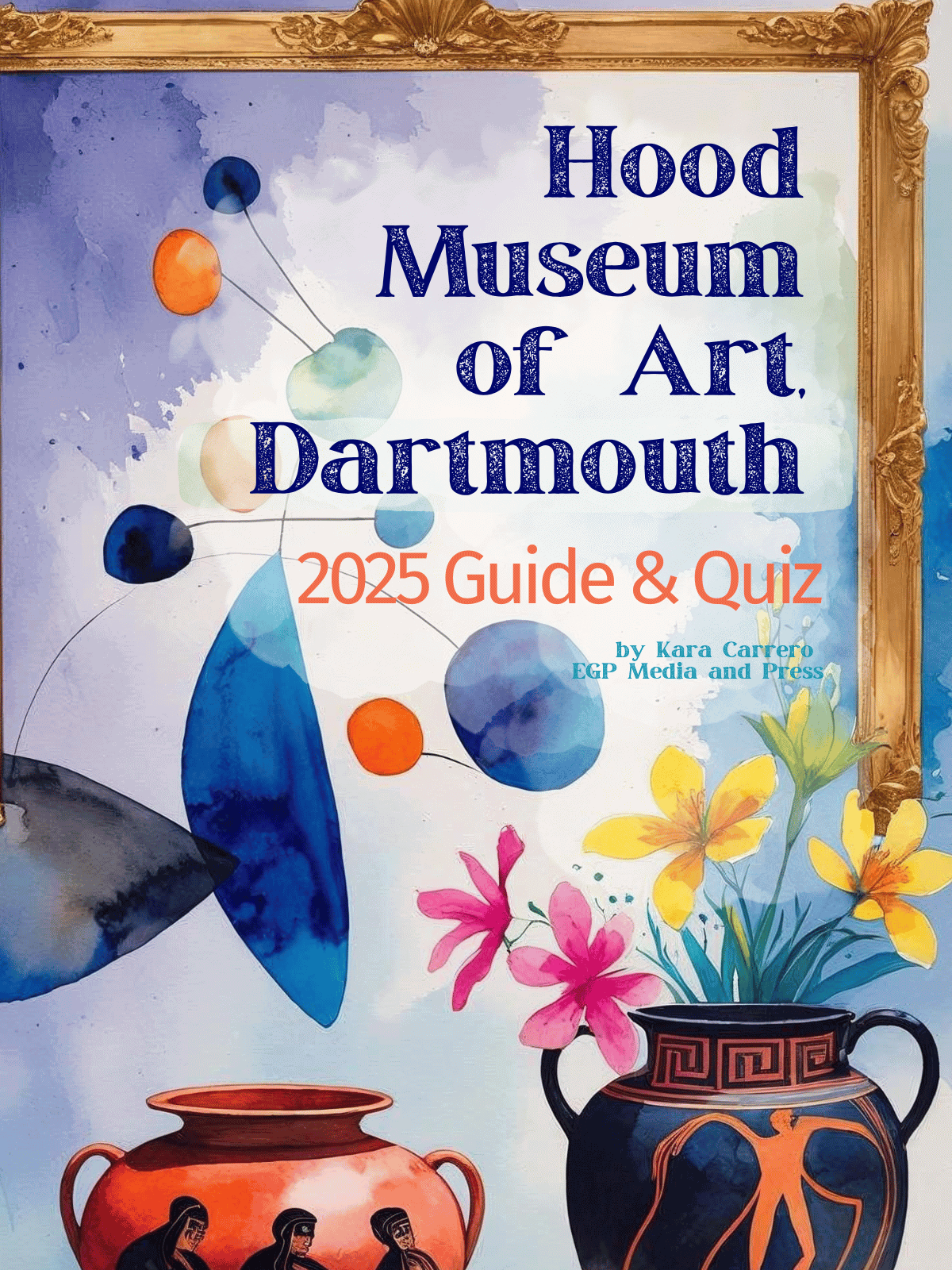
Hood Museum of Art, Dartmouth: Visit Guide & Student Recap Quiz
$0.00
Explore the “Hood Museum of Art Visit Guide & Student Recap Quiz,” a dynamic art history resource for grades K–12. This 15-page package covers Monet’s Impressionism, abstract art, American floral themes, and ancient Mediterranean artifacts with detailed guides, hands-on activities, and a comprehensive quiz. Perfect for museum field trips or classroom learning, it fosters critical thinking and creativity with continued learning opportunities through research, reflection, and collaborative projects.
Description
Unlock a rich, immersive art history experience with the “Hood Museum of Art Visit Guide & Student Recap Quiz”, a personally crafted resource designed for educators to inspire students in grades K–12.
Transform a visit to the Hood Museum of Art into a dynamic learning journey, fostering critical thinking, creativity, and cross-disciplinary connections. Below is an elaborated description highlighting the contents and the continued learning opportunities embedded inside.
What’s Inside the Resource?
- Detailed Museum Visit Guide (8 Pages) Can be used within a homeschool portfolio!
This guide serves as a roadmap through four distinct exhibitions at the Hood Museum of Art, Dartmouth, each carefully curated to spark curiosity and deepen understanding of art’s universal themes:
- Exhibition 1: Monet – Reimagining the Landscape: Introduces Impressionism’s origins in 1874, focusing on Claude Monet’s revolutionary approach to capturing light and atmosphere with loose brushstrokes. Despite a cutoff on Page 1, the guide sets the stage for exploring Monet’s legacy in redefining landscape art.
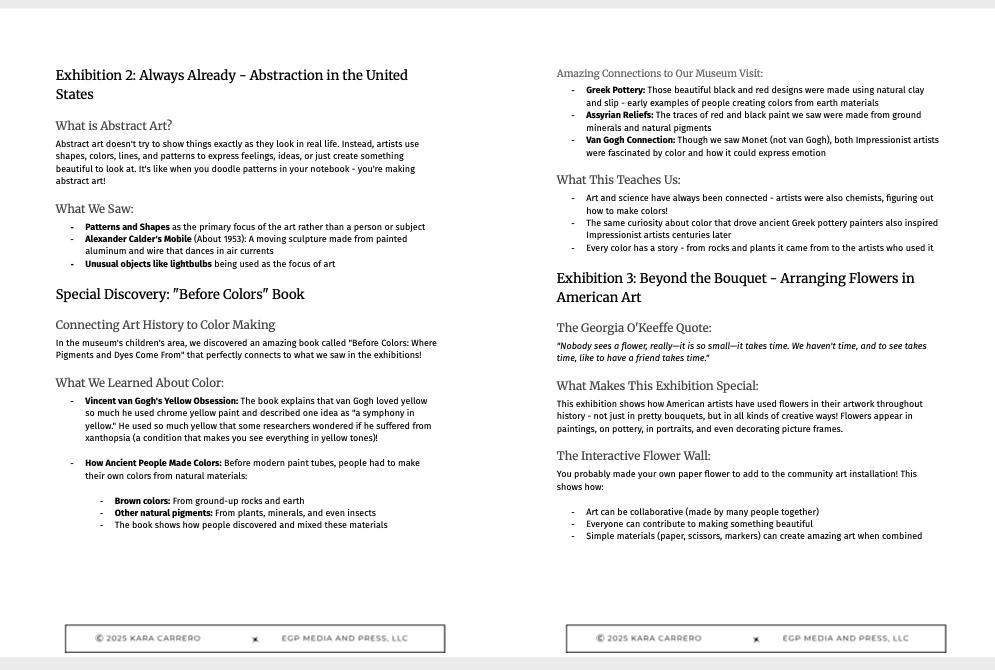
- Exhibition 2: Always Already – Abstraction in the United States: Explores abstract art’s non-representational forms, featuring Alexander Calder’s kinetic mobile .
- Children’s Area: Insights from the “Before Colors” book (A Children’s book but great for all ages), which connects Vincent van Gogh’s yellow obsession to ancient pigment-making techniques. This area sets the stage before going into Beyond the Boquet.
- Exhibition 3: Beyond the Bouquet – Arranging Flowers in American Art: Highlights floral motifs in American art, anchored by Georgia O’Keeffe’s philosophy of close observation in the Children’s area. Includes details on an interactive flower wall, encouraging collaborative creativity.
- Exhibition 4: Stone, Sand, and Clay – Connecting Cultures in the Ancient Mediterranean: Showcases Greek black-figure and red-figure pottery and Assyrian reliefs from King Ashurnasirpal II’s palace (883–859 BCE), emphasizing materials, techniques, and introduces “provenance” as an art term.
- Additional Artworks: Covers diverse pieces like Japanese woodblock prints by Munakata Shiko, Chinese rubbing art, and modern Indigenous photography, broadening cultural perspectives.
- Big Ideas & Reflection Questions: Synthesizes themes like art’s universality, materials, and storytelling, with thought-provoking questions comparing Monet’s brushstrokes to Assyrian reliefs or exploring O’Keeffe’s call to slow observation.
- Vocabulary Section: Defines key terms like Impressionism, abstract, relief, cuneiform, and provenance, building students’ art literacy.
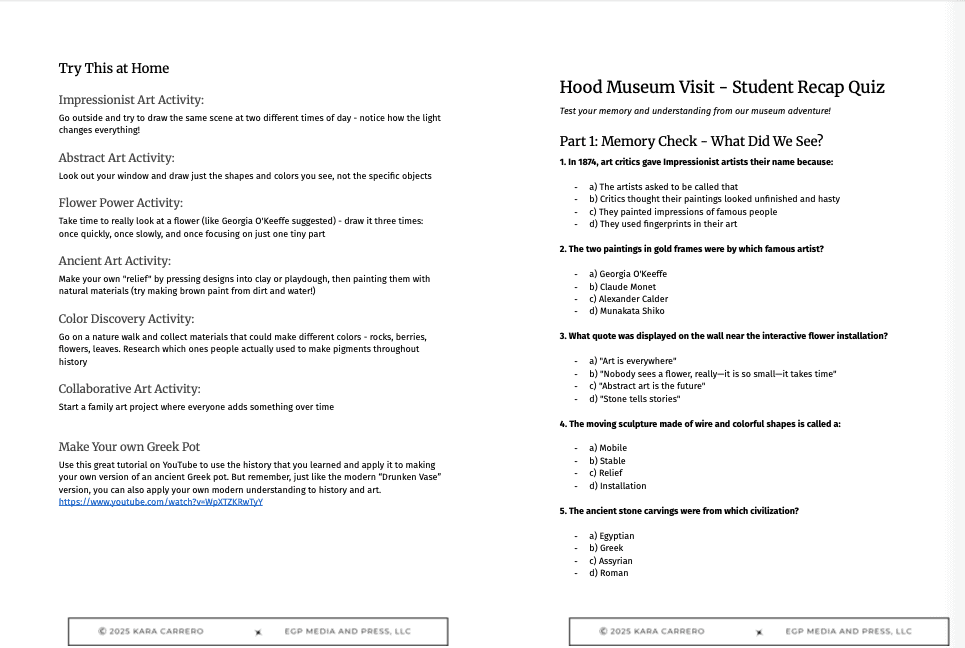
- Try This at Home Activities: Offers hands-on projects, such as drawing scenes “en plein air,” creating clay reliefs, or making Greek-inspired pottery using a YouTube tutorial, encouraging practical application of concepts.
- Student Recap Quiz (7 Pages)
This engaging quiz reinforces and assesses student learning with varied question formats, ensuring retention and deeper analysis:
- Part 1: Memory Check: Multiple-choice and checkbox questions test recall, e.g., Impressionism’s origin, Monet’s role, Greek pottery techniques, and Assyrian reliefs’ bright colors.
- Part 2: Understanding Art Styles: Matching and true/false questions clarify distinctions between Impressionism, abstract art, and relief sculpture.
- Part 3: Thinking Deeper: Open-ended questions probe concepts like the purpose of the interactive flower wall or O’Keeffe’s philosophy of observation.
- Part 4 & 5: Creative & Detective Skills: Encourages creative responses (e.g., adding to the flower wall) and analytical skills (e.g., identifying Assyrian reliefs from descriptions).
- Part 6: Creative Thinking: Prompts students to design their own exhibition and reflect on impactful artworks, fostering personal engagement.
- Answer Key & Reflection Questions: Provides clear answers and discussion prompts like “What surprised you most?” to spark classroom dialogue.
Continued Learning Opportunities
This resource is designed not as a one-time lesson but as a springboard for ongoing exploration, ensuring students continue to grow in their understanding of art, history, and creativity:
- Hands-On Activities for Extended Engagement: The “Try This at Home” section includes activities like creating abstract art from observed shapes, crafting clay reliefs with natural pigments, or following a YouTube tutorial to make Greek-inspired pottery. These projects encourage students to experiment with artistic techniques, bridging classroom learning with real-world application and fostering a lifelong appreciation for art-making.
- Cross-Disciplinary Connections: The guide emphasizes art’s intersection with science (e.g., pigment chemistry in “Before Colors”), history (e.g., ancient Mediterranean cultures), and language arts (e.g., analyzing O’Keeffe’s quote). Activities like researching natural pigments or cuneiform writing invite students to explore STEM and humanities topics, supporting integrated curricula.
- Open-Ended Reflection and Discussion: Questions like “How do materials affect an artwork’s meaning?” or “What patterns connect different artworks?” encourage critical thinking and can be revisited in essays, debates, or art projects. The quiz’s reflection prompts, such as “How has your idea of ‘art’ changed?”, promote ongoing dialogue and self-assessment.
- Collaborative and Creative Projects: The interactive flower wall concept inspires group projects, while the quiz’s curation question (“What theme would you choose for an exhibition?”) invites students to plan their own museum displays, potentially leading to classroom art shows or presentations.
- Research Opportunities: The emphasis on provenance, ancient pigment sources, and artists like Monet or Calder encourages students to dive deeper through independent research, visiting library resources, or exploring online museum collections, fostering inquiry-based learning.
- Cultural and Historical Exploration: By covering art from ancient Greece to modern Indigenous photography, the resource opens doors to further study of global cultures, encouraging students to investigate Assyrian mythology, Greek pottery techniques, or contemporary art movements.
Perfect for art history, social studies, or interdisciplinary classrooms, this resource captivates students with its vibrant content and interactive elements. It aligns with standards for visual arts, critical thinking, and historical analysis, while its continued learning opportunities ensure students remain engaged beyond the initial lesson. Teachers and Parents will appreciate the ready-to-use guide, quiz, and answer key, which save prep time while delivering a rich, student-centered experience. Whether preparing for a Hood Museum field trip or bringing the museum to your classroom, this resource transforms art education into a journey of discovery, creativity, and connection.
Additional information
| Subject | |
|---|---|
| Setting - US Region | |
| Cultural Focus | American Heritage, Global Citizenship, Indigenous Perspectives, Multicultural, Native American Culture and Heritage, World Cultures |
| Seasonal | |
| Setting - US State | |
| Unit Integration | |
| Time Period | |
| Grade Range | 3-12, 3-5, 6-12, Elementary, High School, K-3, Middle School |


Reviews
There are no reviews yet.