Teaching Analytical Thinking by Applying Impressionist Art and AI Tools
How we transformed our Impressionist art study into a powerful lesson in critical thinking, creative confidence, and wise technology use
Picture this: Your child has been studying Impressionism for weeks. They know about Monet’s revolutionary plein air paintings, understand the importance of loose brushstrokes, and can tell you all about how portable paint tubes changed art history forever. But there’s a difference between knowing facts and truly thinking like an artist and analyst.
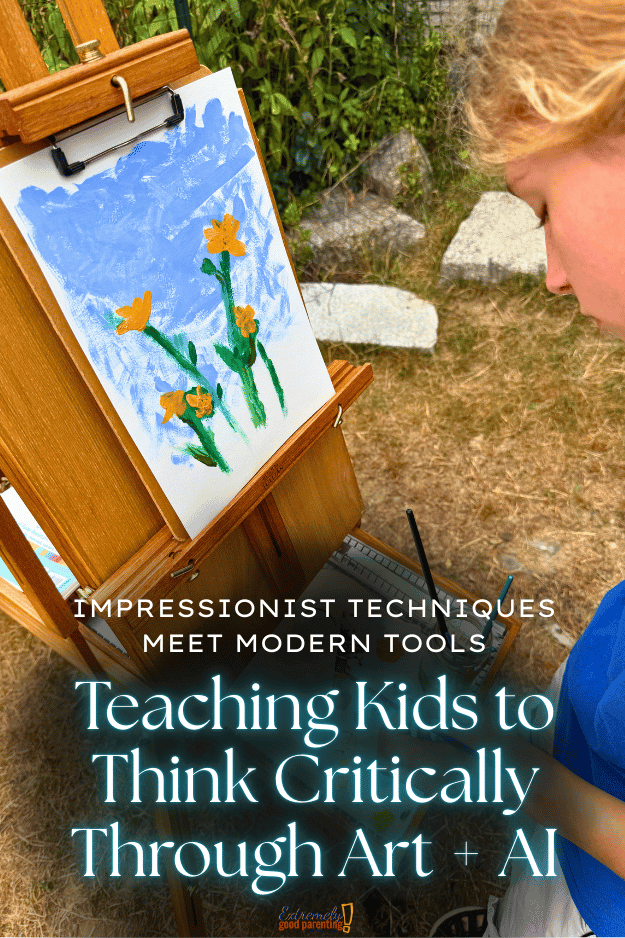
Last week, I watched my three children experience breakthrough moments that reminded me why I’m so passionate about hands-on, thoughtful education. They didn’t just create beautiful Impressionist-inspired paintings—they learned to think critically, accept constructive feedback, and use technology as a tool for deeper understanding rather than a shortcut to finished work.
The “Think for Yourself First” Philosophy
Before I share our step-by-step process, let me explain the educational philosophy that guides everything we do in our homeschool: Think for yourself first.
Just like we wouldn’t hand a child a calculator before they understand basic math concepts, we shouldn’t introduce powerful tools like AI before children have developed their own thinking, observation, and creative skills. The goal isn’t to eliminate struggle or challenge—it’s to use appropriate tools to enhance learning and push thinking deeper when children are ready.
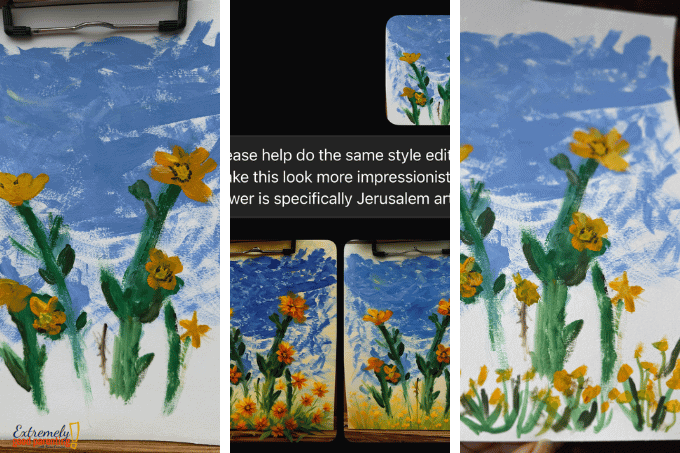
This approach builds genuine confidence. When my 12-year-old saw how AI analysis enhanced her already solid foundation, she wasn’t dependent on the tool—she was empowered by it. There’s a crucial difference.
Setting the Foundation: Our Impressionist Study
Our art project didn’t happen in isolation. We’d spent weeks building foundational knowledge:
- Museum visits: Seeing Monet’s work in person at our local art museum created that irreplaceable “wow” moment that no textbook can provide
- Historical context: Understanding why Impressionism was revolutionary—how artists moved from studios to outdoors, from precise detail to capturing light and moment
- Technique study: Practicing loose brushstrokes, understanding color theory, learning about the paint tube innovation that made plein air possible
- Visual analysis: Looking at masterpieces and discussing what made them distinctly Impressionist
This foundation was crucial. Without it, the AI analysis later would have been meaningless noise rather than meaningful enhancement.
The Step-by-Step Process: How We used AI to analyze and improve student art projects
Step 1: Independent Subject Selection and Planning
I had each child choose their own subject based on what they’d observed in Impressionist works. This wasn’t random—they had to justify their choices based on their understanding of what Impressionists typically painted and why.
- My 12-year-old chose a garden scene with dappled sunlight
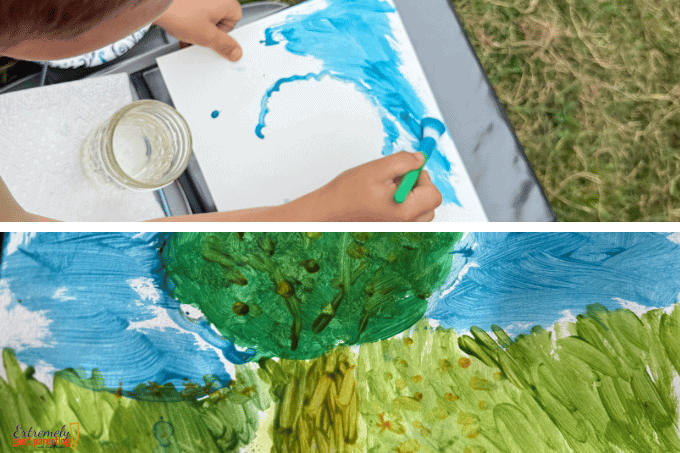
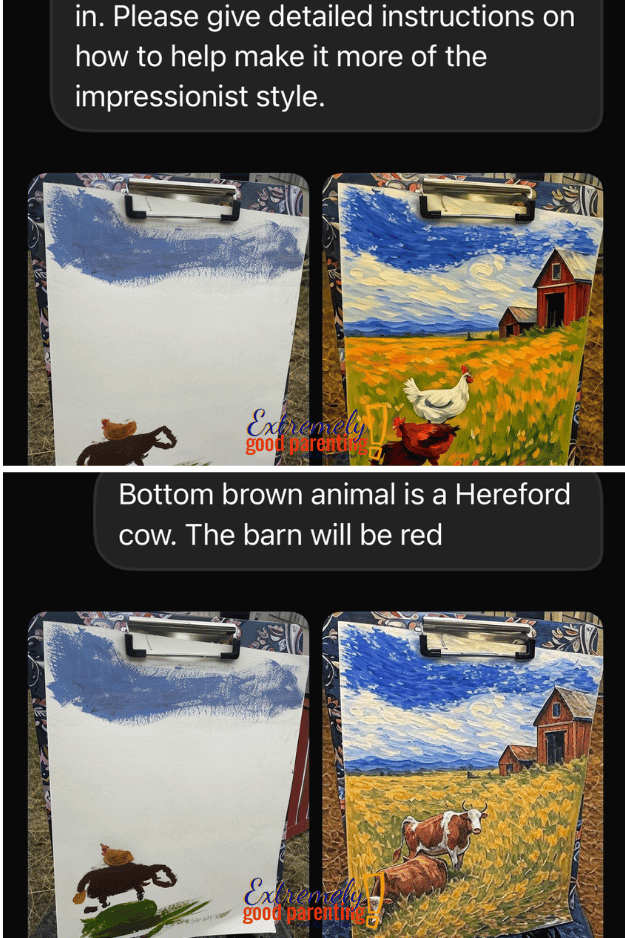
- My 10-year-old selected a farm landscape with movement and atmosphere
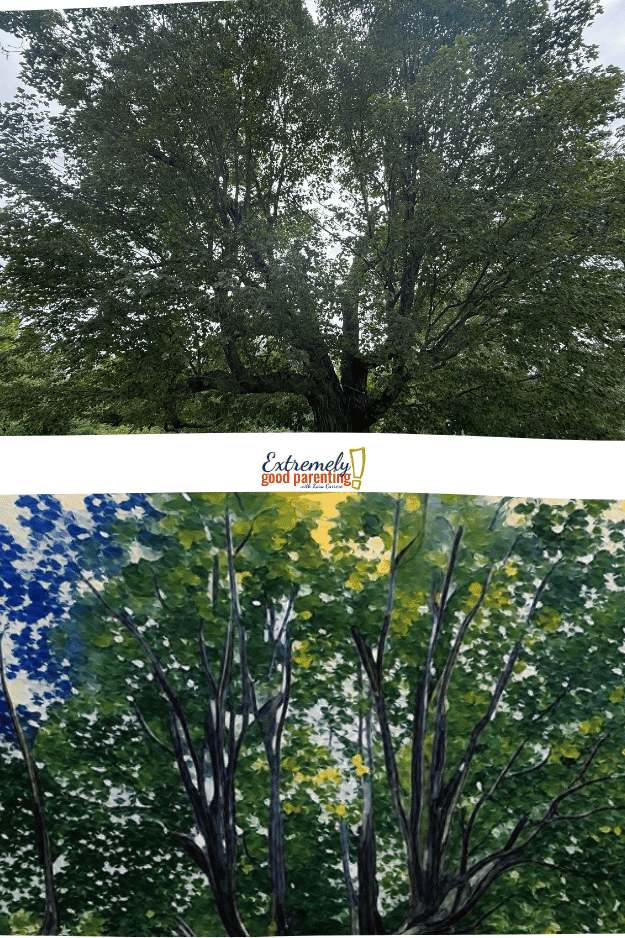
- My 8-year-old decided on trees with filtered light
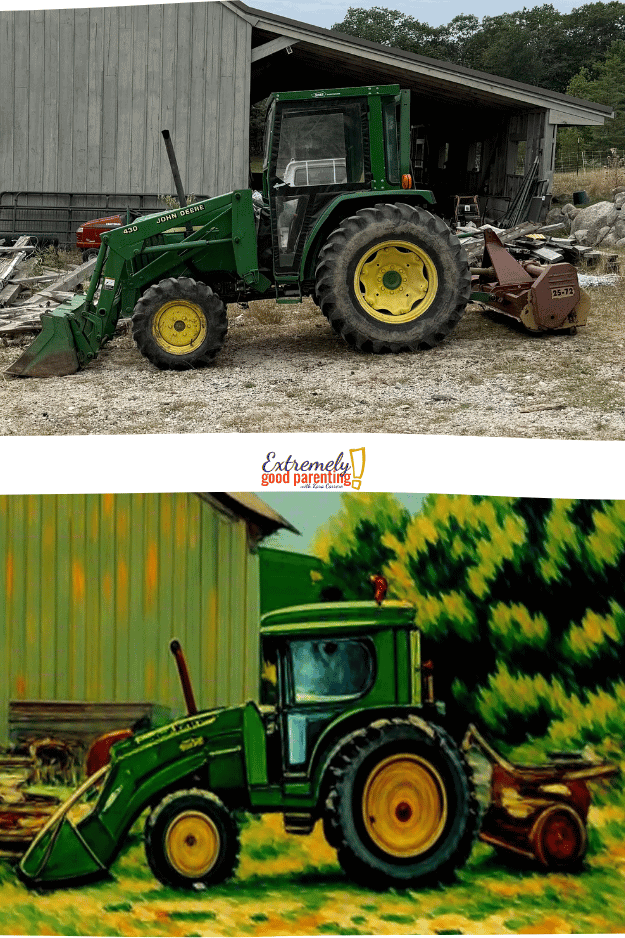
- My 6-year-old joined in and painted a tractor based on the Industrialization impact on art at the time
Step 2: Begin Painting with Existing Knowledge
Here’s where “think for yourself first” became practical application. They started painting using everything they’d learned: loose brushstrokes, focus on light, color mixing techniques.
No mention of AI yet. No external analysis tools. Just their knowledge, observation skills, and creative instincts.
Step 3: Strategic AI Introduction (Age-Appropriate Timing)
This is where the impact and analysis happened, but the timing was everything:
For my older girls (ages 10 and 12): I waited until they were about 50% complete and either felt genuinely stuck or had reached a natural pause point. This preserved their ownership while opening up new possibilities.
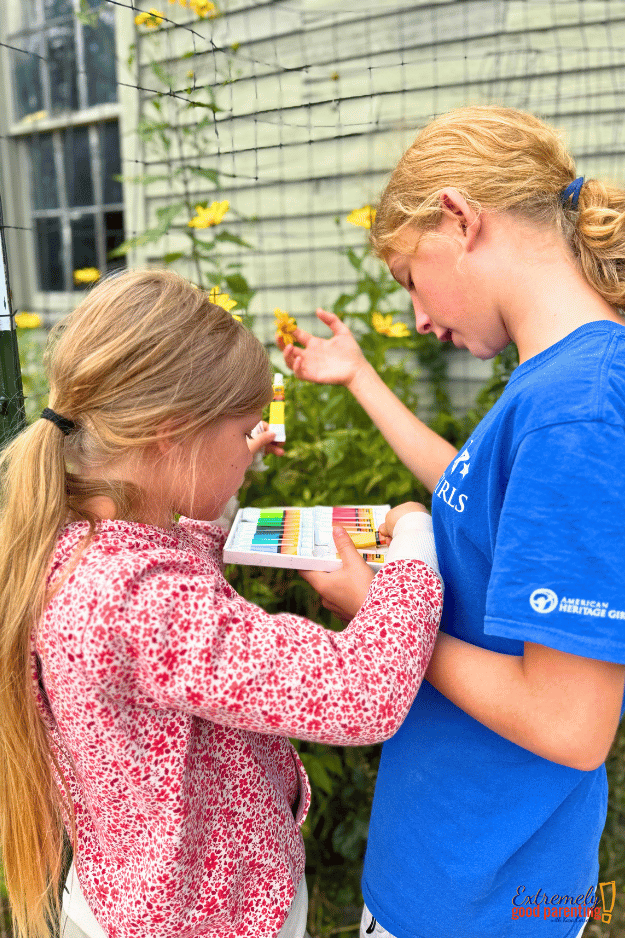
There were “aha” moments when they saw the loose brushstrokes of the grass and the feeling of movement because of it. Or the depth of color in the flowers. They also accepted the criticism (or rejected some of it) and made conscious decisions on how to move forward.
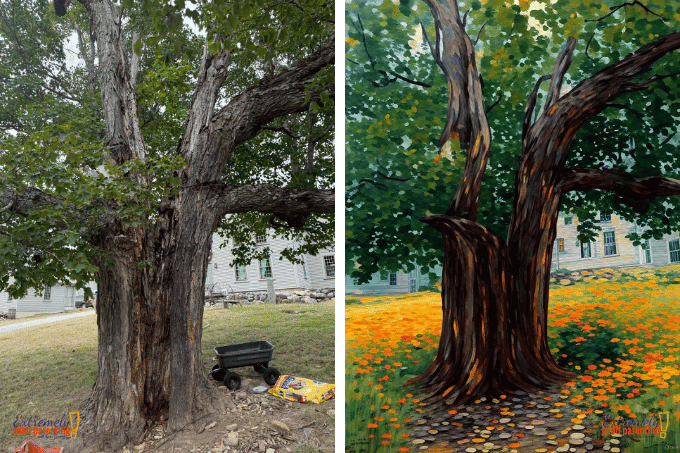
For my 8-year-old son: We took a different approach. Before he started painting, we took a photo of his subject (the trees) and used AI to create an Impressionist interpretation. Then we analyzed what the AI version emphasized—particularly how it captured light filtering through branches—and discussed what that taught us about Impressionist techniques. This gave him a visual guide without doing his thinking for him.
We did something similarly for my 6-year-old. I knew that they would have less ability to show their understanding by applying painting techniques because of ages and ability to paint but wanted to still use the opportunity as a discussion starter.
Step 4: Using Artificial Intelligence in the classroom or Large Language Models as Analysis Partner, Not Replacement
When we introduced AI, or more accurately named Large Language Models (LLM), it served two specific functions:
Verbal Critique: I had the children describe their work to the AI and ask for feedback on their Impressionist techniques. The AI provided specific observations about brushwork, color choices, and composition.
Visual Enhancement: We used AI to show possibilities, not to create their final work, but to help them visualize “what if” scenarios.
What if the light were more dramatic?
What if the brushstrokes moved differently?
What if we added something not in the picture because of the way it makes the picture “feel”?
What if using color I don’t see in real life gives the impression of what I do see in real life?
Step 5: Critical Evaluation of Feedback
Here’s what separated this from passive consumption: My children had to evaluate whether the feedback from Grok, Claude, ChatGPT, etc. was accurate and helpful. They had to decide what suggestions aligned with their artistic vision and what didn’t.
My 12-year-old learned to question: “Does this suggestion actually make my painting more Impressionist, or just more colorful?”
My 10-year-old realized: “The AI suggestion about brushstroke direction makes sense for showing wind in my farm scene.”
My 8-year-old understood: “I can see how mixing these colors will show the light better, like in the example we looked at.”
The Breakthrough Moments
Confidence Building: My 12-year-old was absolutely amazed when she saw how her solid foundation could be enhanced to become even more impressionistic. The AI analysis didn’t replace her work, it affirmed that her instincts were good and showed her how small adjustments could create big impact. Suddenly, she understood how to use color to convey light in completely new ways.
Technical Understanding: My 10-year-old had this wonderful realization about how brushstroke direction could bring movement and energy to her farm scene. And instead of me harping on “loose brushstrokes” she was able to adapt what she was doing to try to better it without it feeling like I was telling her she wasn’t doing well. It wasn’t just about loose strokes anymore, it was about intentional direction and purpose.
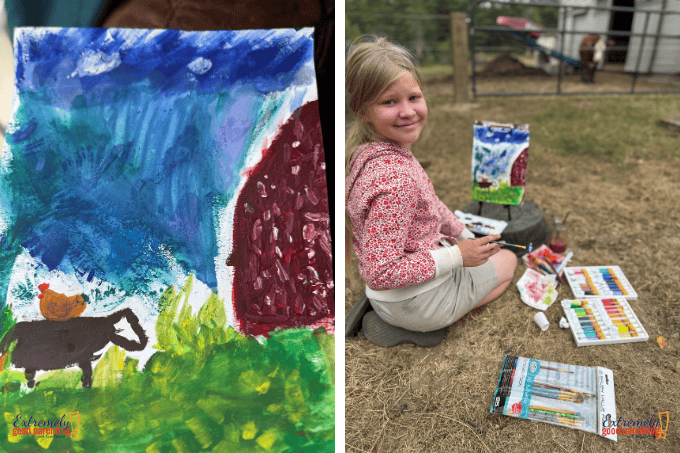
Creative Experimentation: My 8-year-old began experimenting with color mixing for his tree landscape with fresh enthusiasm and understanding. The AI-generated example hadn’t done his thinking for him, it had shown him possibilities he could explore with his own hands and creativity.
Teaching Children to Accept Constructive Criticism
One of the most valuable aspects of this entire project was watching my children learn to receive and evaluate feedback constructively. In our culture of participation trophies and “everyone’s an artist,” we sometimes forget that learning to accept critique is a crucial life skill.
Here’s how we approached it:
Frame feedback as growth opportunity: “This isn’t about your work being wrong—it’s about making it even stronger.”
Teach evaluation skills: “Just because someone (or something) gives feedback doesn’t mean you have to take all of it. What parts help your artistic vision?”
Model the process: I showed them how I receive critique on my own work and demonstrated thinking through feedback rather than automatically accepting or rejecting it.
Celebrate the learning: We focused on the excitement of discovering new possibilities rather than the discomfort of hearing suggestions for improvement.
Addressing Common Concerns About AI and Children
“Won’t this make children dependent on technology?” Not if introduced properly. Just like calculators didn’t eliminate the need to understand math, AI tools don’t eliminate the need for foundational knowledge and critical thinking. The key is sequencing: foundation first, enhancement second.
“Is this cheating or taking shortcuts?” Only if misused. When AI replaces thinking, it’s problematic. When it enhances thinking and opens up new possibilities, it’s educational. The children still did all their own painting, decision-making, and creative work and I guided them in the process.
“How young is too young for AI tools?” It depends on the child’s foundational knowledge and ability to think critically about feedback. My 8-year-old was ready for visual examples and simple analysis. My older children could handle more complex critique evaluation. Know your child. And don’t just hand them the tool Use it beside them whether you’re at the controls or they are.
“What about creativity and originality?” Used properly, AI actually enhanced their creativity by showing them possibilities they might not have considered. Their final works were more distinctly their own because they had made informed choices about what feedback to incorporate.
Practical Implementation Tips for using AI in your Art Class
Start with solid foundation: Don’t introduce AI analysis until children have genuine knowledge to work from.
Time it strategically: For older children, wait until they’re partway through and either stuck or at a natural pause. For younger children, consider using AI examples as visual guides before they start.
Use it as a thinking prompt: Ask questions like “Do you agree with this feedback? Why or why not?” rather than “Here’s what you should do.”
Maintain ownership: The final decisions should always belong to the child. AI suggests, they choose.
Focus on the learning: Celebrate the thinking process and breakthrough moments, not just the final product.
The Bigger Picture: Preparing Children for an AI World
We live in an incredible time where we can introduce our children to amazing tools and advancements that can genuinely help them learn and deepen their understanding. The key is teaching them to use these tools wisely and without fear, but with thoughtful, proper application.
Related: Are we warning our children of the dangerous downsides of new tech?
Our children will grow up in a world where AI is commonplace. Rather than fearing this reality or pretending it doesn’t exist, we can teach them to be thoughtful users who maintain their creative voice while leveraging powerful tools for enhanced learning and deeper understanding.
This art project taught my children that they didn’t just paint—they analyzed, evaluated, and created with intention. They became critical thinkers AND confident artists.
Moving Forward: What’s Next
This approach doesn’t end with one art project. The analytical thinking skills, comfort with constructive feedback, and wise technology use will transfer to every subject we study. My children now approach challenges with more confidence, knowing they have both internal capabilities and external tools to help them grow.
They’re capable of such sophisticated thinking when we give them the right framework and trust them with the process.
Grab some of our Art Resources – 30% off through 8/22
Grab any Art related product in my shop with code ART30 to get 305 off through 8pm Eastern time on 8/22/2025 to celebrate some of our newest resources.
Art History Trivia: 120+ Interactive Cards & Game Guide
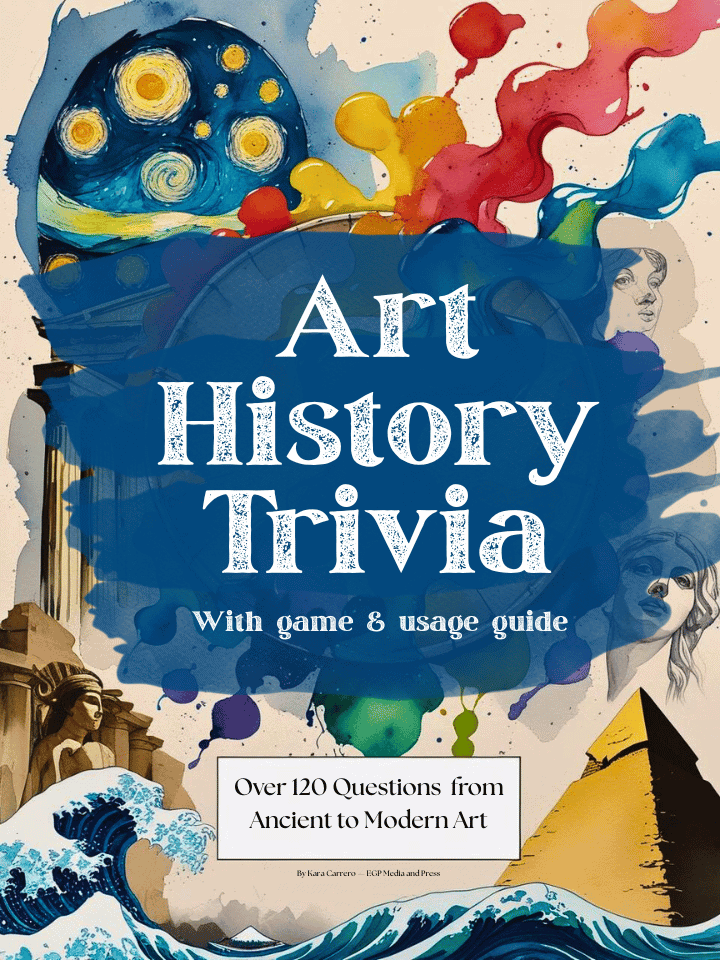
120+ trivia cards covering 16 art history topics: Art Basics & Definitions, Ancient Egyptian, Greek, Roman, African, Chinese, Medieval, Renaissance, Impressionism, Cubism, Surrealism, Pop Art, Famous Artists, Masterpieces, Art Terms…
Impressionist History Copy Work: 5 Daily Sentences & Art for Kids

Transform handwriting practice into an art appreciation adventure! This 5-day Impressionist Art copywork bundle features 4 difficulty levels (ages 5-12+) with beautiful sentences about Monet, Renoir, and Impressionist history. 20 total…
Chasing Vermeer Project-Based Novel Study: Grades 3-12

Transform literature into adventure with this comprehensive project-based study of Chasing Vermeer.
Pointillism Neo-Impressionist Art Copywork Pack

Explore Pointillism and Neo-Impressionism with this five-day copywork pack for ages 5+. Includes leveled handwriting sentences on art history, step-by-step instructions for two differentiated art projects (flower garden and sunny…
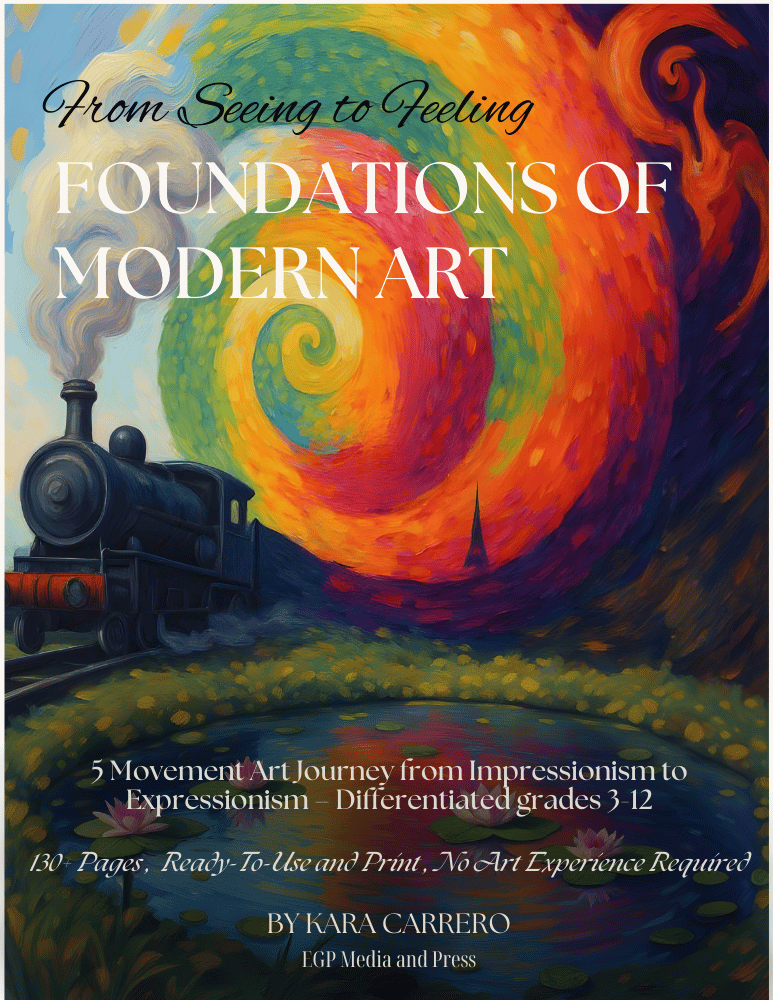
Foundations of Modern Art: From Seeing to Feeling Art History Unit Study
Complete art history curriculum and unit study covering the birth of modern art (1860s-1910s). Includes 5-movement progression from Impressionism to Expressionism with differentiated materials for grades 3-12. Features hands-on projects, historical context, assessment tools, and flexible 5-day to 3-week implementation. Perfect for homeschool, classroom, or family learning. 130+ pages of ready-to-use content.
For members and supporters
Get access to the Download Dashboard
Printable PDFs in course format for history, literature, and cross-curricular studies. Download what fits your students, print it, and start teaching.
- Course-style PDFs. Structured, ready-to-print studies that guide students from the first page to the last.
- Grab what you need. Choose the studies that fit your students and download them from one dashboard.
- New downloads as it grows. More are added over time, so there is always something new to print.
$5 a month
See what is inside Already a member? Open your dashboardPrefer to start free? Many challenges also arrive as simple emails when you subscribe.