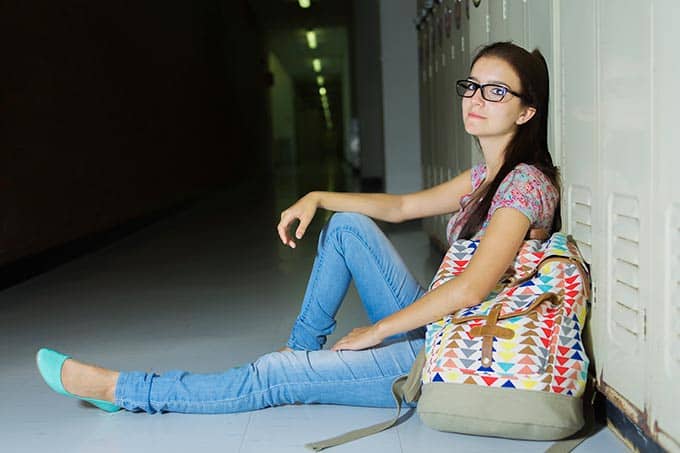
How to teach students #walkup and #walkout are not mutually exclusive
This isn’t a political post.
In fact, I will never tell you how I feel about guns or the 2nd Amendment.
But this is about our kids. It’s about their need to stand up, be heard, and make change as they see necessary and to be better citizens.
In high school, I remember both witnessing bullying in both subtle and overt ways. I am young enough that I can say that it was the beginning of the age of cyberbullying where kids were learning the benefits and dangers of anonymity, but also the harsh reality that their keyboard gave them a powerful voice they were afraid to use to someone’s face.
Then in college, I got news that one of the younger girls I had befriended in high school jumped from the building, paralyzing herself from the neck down. A few weeks later, I heard about a friend’s younger brother died from suicide. Then as I started teaching, I started seeing the effects of social media and bullying from the other side.
Related: Are we warning our kids of the dangerous down sides of new tech?
A student started cutting himself, and no one noticed.
Another student moved to a different school because she failed to connect and her grades were suffering.
Even one of the most popular kids was on the brink of meltdown from depression because of the highlight reel life that facebook, twitter, and instagram brought. And no one detected it.
And a Walk Up could have helped heal these wounds.
I saw how technology made some kids feel invincible and others feel as small as a fly on the wall. That social media, texting, and the internet as a whole had widened the gap between the connection that kids felt with each other and even how they talked. And of course, adults felt a million miles away.
I noticed the kid who cut himself. And when he asked if he could eat lunch in my room, I couldn’t allow it. It was against school policy for a student and teacher to be one-on-one in a classroom. But he didn’t have other friends.
I even noticed the popular kid struggling with depression. I remember passing a note to him with one of those “How I am feeling” funny faces for him to circle. And right then an there he broke down into tears and scribbled me a longer note than any essay he had ever written for my world history class.
Don’t go praising me.
Teachers across the country see it too. In fact, every single campus in America has faced bullying. Every elementary school, middle school, and high school deals with disconnected students struggling to be seen and heard… by their peers.
It’s not a failure on the kids’ part. In fact if we think that #WalkUp and #WalkOut are mutually exclusive, then yes, it would appear that telling kids to “Walk Up, Not Out” would be victim blaming. That we’re maybe subtly pointing fingers saying “all you kids are the reason these deaths are happening”.
But if we recognize that the two movements don’t have to be opposed to each other, maybe we’ll also make changes in every single school in America. Not every classroom has experienced gun trauma, but every district deals with bullying and mental health obstacles and if we raise our kids to be more aware, more cognizant, more receptive of the needs within their own community, we’re raising our kids to make change.
So in this polarized age of guns or no guns, let’s teach our students that there can be a place for both a walk-up and walk-out. Let’s even teach our kids that it’s ok to believe in just one, both, or neither.
They just don’t have to be mutually exclusive.
In fact, in Maslow’s hierarchy of needs, we see that both safety and love & belonging have to be achieved before kids can experience higher levels of self-esteem or start performing at a higher level in school.
- Meaning that if kids think that a walk out will be what makes them feel safe, then they should be encouraged to do what they think will make a difference.
- And it also means that if a student feel like friendship, connectedness, and love would be achieved through one or more walk up movements, then it’s a viable option to make positive change.

What our students need to know about the #WalkUp movement
Emotional intelligence is taught. It needs to be introduced in our homes, reinforced at school, and practiced over and over so our children can grow up to be kind, compassionate world-changers.
A child can believe in reformed gun laws while also believing in learning to be more aware of the emotional needs within their own school. Or they can also believe in completely preserving the 2nd Amendment while still supporting the need to improve the mental health of America’s future… without feeling like a school shooting will happen if they don’t.
Related: Our kids must see respectful disagreements, so how can we teach it?
Bullying has been an issue long before mass shootings became normalized. And bullying is an issue that takes the lives of students that don’t even have access to guns.
While it’s not the fault of a peer that a classmate may choose an inappropriate outlet for their emotions, what if we were raising our kids to be so in-tune with their community’s physical, emotional, and psychological needs that as a country we start providing better alternatives for the kids who feel like they have nowhere to turn?
Learning to take notice is powerful skill that will serve our kids their whole lives
When we raise our kids to notice the people who feel like outcasts, we’re raising them to care even for the least of those among them. It’s about serving those around them and learning that as humans we’re not meant to live in isolation (literally or emotionally).
Service can be as simple as filling someone’s love tank with words of affirmation or as life-giving as their bowl with soup.
As tweens and teens, let’s teach our children to be emotionally intelligent and learn to not be so self-focused, that they can’t recognize those around them that are hurting or needing in some way.
When we teach our kids to build up and depend on community, they learn they’re not alone
We always admit that it takes a village to raise a child, but once our kids get into the tween and teen years, we have to admit that their primary village is their group of peers. They’re less likely to turn to adults for help, especially if they don’t feel like there’s open communication.
So when we teach our children to be good friends and to be listeners and do-ers, hopefully they will build a greater sense of community. In fact community has the powerful ability to heal. We see it after distasters, but what if we also started seeing it before something devestating happened?
I hope and pray that my kids will turn to me if something is troubling them. And that even if they don’t, they will have observant and caring friends that will take notice and listen. And that my own kids would do the same for their friends.
Related: How to help kids foster meaningful friendships: don’t just be good, DO good.
Civic responsibility starts in our hometown, continues into our state, and extends to our country
Part of being a history teacher, it was important for me to educate my students about their role as a citizen. And today like back then, I still believe this is more than just voting. This is more than just protesting. This is more than just calling for change but it’s also being the change.
We must teach our kids that they can be the change they want to see at every level of citizenship. They can create movements for what they believe in inside their schools and communities. They can petition their state legislatures to pass local legislation. And if they wish, they can be a part of or even organize a nation-wide walkout.
Click the image preview to get your free download to teach our kids to be a positive example!
Using the word “SMILE” this is a cheat sheet on how to reframe negative thoughts and words into something more positive for the family and for our students to focus on. It’s an immediate shift from negative to positive!

More resources for parenting teens & tweens


For members and supporters
Get access to the Download Dashboard
Printable PDFs in course format for history, literature, and cross-curricular studies. Download what fits your students, print it, and start teaching.
- Course-style PDFs. Structured, ready-to-print studies that guide students from the first page to the last.
- Grab what you need. Choose the studies that fit your students and download them from one dashboard.
- New downloads as it grows. More are added over time, so there is always something new to print.
$5 a month
See what is inside Already a member? Open your dashboardPrefer to start free? Many challenges also arrive as simple emails when you subscribe.




Yes!! This exactly!