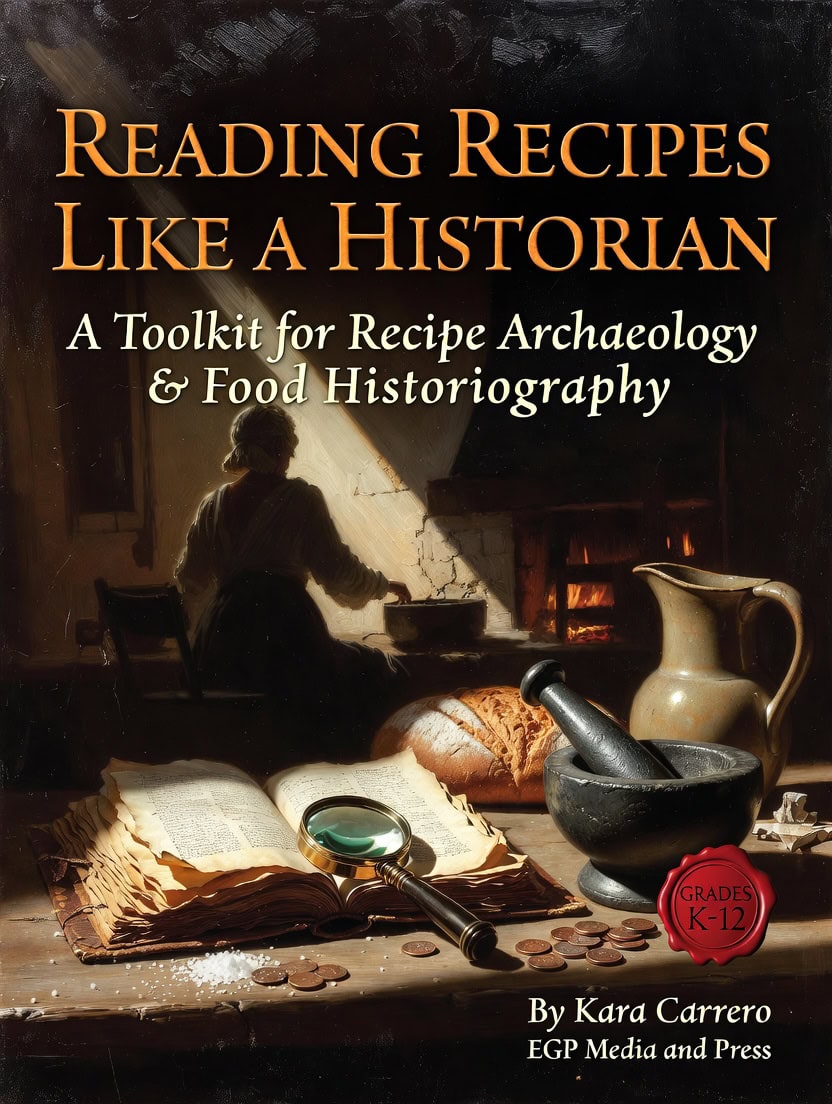
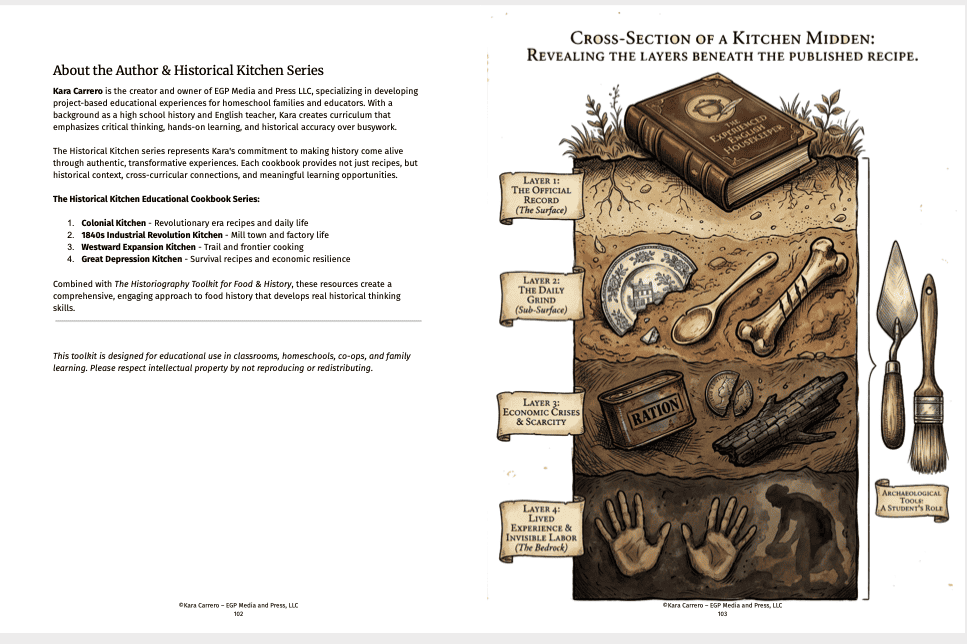
Reading Recipes Like a Historian: Recipe Archaeology and Food Historiography
$21.00
Teach sophisticated historical thinking through food historiography! This 106-page toolkit shows students grades K-12 how to analyze historical recipes as primary sources revealing economic pressure, daily realities, and the context behind historical decisions.
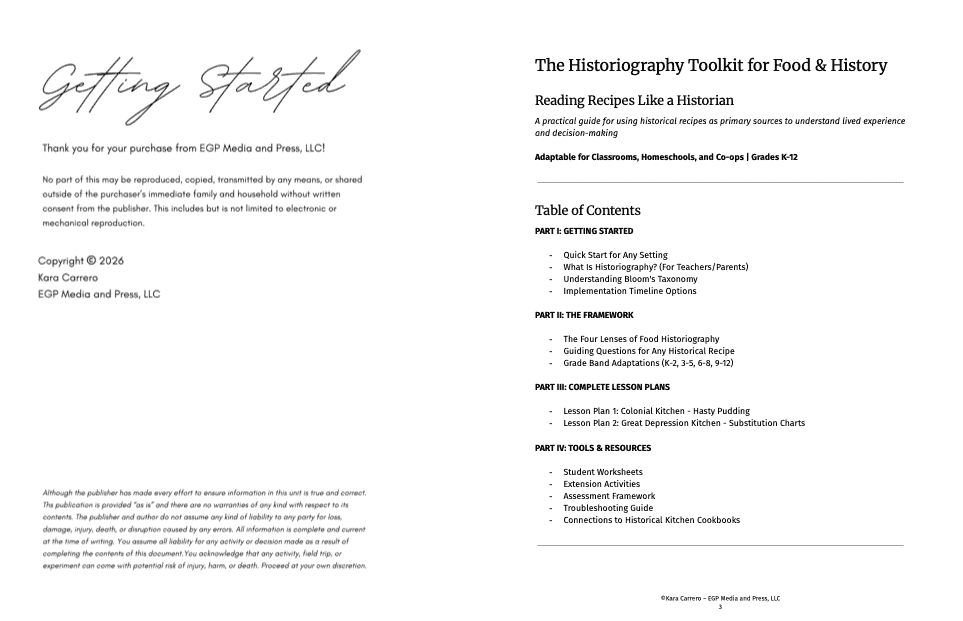
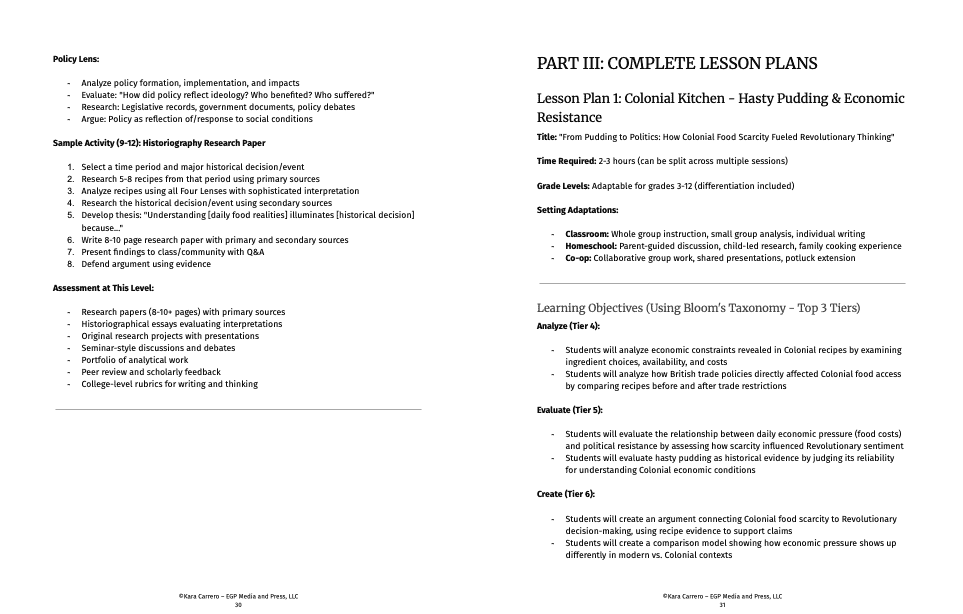
Includes complete theoretical framework, two ready-to-teach lesson plans (Colonial & Great Depression), grade-level adaptations K-12, student worksheets, assessment rubrics, and flexible implementation for classrooms, homeschools, and co-ops. Uses the Four Lenses framework (Economic, Technological, Social/Cultural, Policy) to develop critical thinking, primary source analysis, and evidence-based argumentation.
Description
The Historiography Toolkit for Food & History: Reading Recipes Like a Historian
Transform how your students understand history by teaching them to read recipes as primary source documents that reveal the lived experiences, economic pressures, and daily realities that shaped historical decision-making.
This comprehensive 102-page toolkit teaches sophisticated historical thinking skills through an accessible, hands-on approach that works for grades K-12 in classrooms, homeschools, and co-ops. Using the innovative Four Lenses framework (Economic, Technological, Social/Cultural, and Policy), students learn to analyze historical recipes to understand what life was actually like and not just what happened, but why people made the decisions they did.
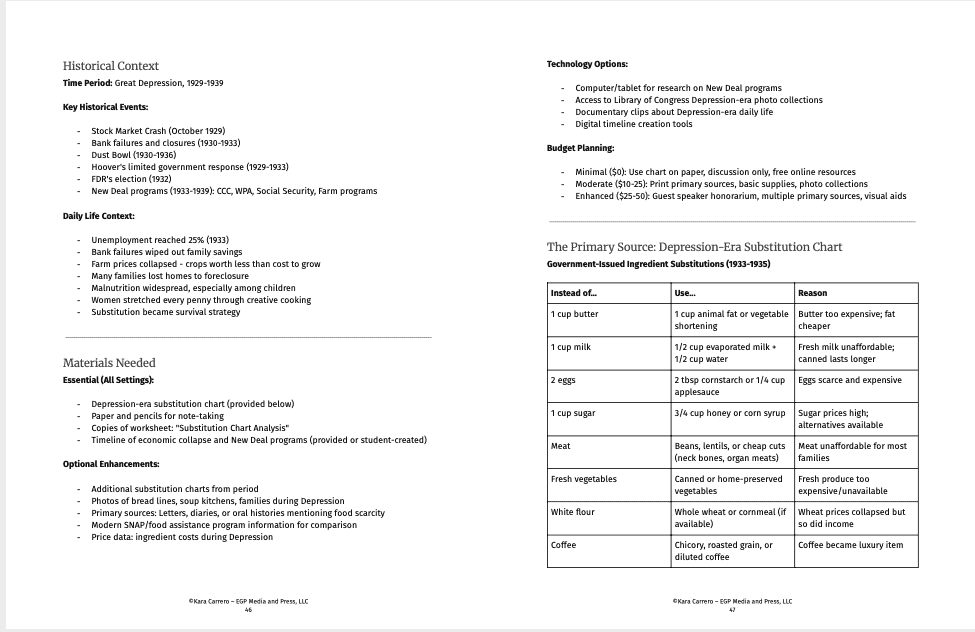
What Makes This Different: Unlike traditional history teaching that focuses on dates and battles, this toolkit uses food historiography to illuminate the daily stresses, time constraints, economic pressures, and physical realities that most people faced. When students understand that Colonial families spent hours cooking over open fires, or that Depression-era families couldn’t afford eggs and milk, historical events suddenly make visceral sense.
What’s Included:
- Complete theoretical framework for food historiography (with practical explanations for non-historians)
- Four Lenses analytical system that works with ANY historical recipe
- Grade-band adaptations for K-2, 3-5, 6-8, and 9-12
- Two complete, ready-to-teach lesson plans with all materials (Colonial Hasty Pudding & Great Depression Substitution Charts)
- Five ready-to-use student worksheets for recipe analysis
- Multiple implementation timelines (1 week to full year)
- Extension activities including Recipe Archaeology, Historical Decision Debates, and Modern Parallels
- Assessment framework with rubrics for essays, projects, and portfolios
- Troubleshooting guide for common challenges
- Integration guide for Historical Kitchen cookbook series
- Adaptations for classroom (25-30 students), homeschool (1-4+ students), and co-op (8-20 students) settings
Skills Students Develop:
- Primary source analysis and evidence-based argumentation
- Historical thinking and contextual reasoning
- Multiple perspective analysis and historical empathy
- Critical thinking at Bloom’s Taxonomy highest levels (Analyze, Evaluate, Create)
- Cross-curricular connections between history, economics, technology, and social studies
Perfect For:
- Homeschool families seeking Charlotte Mason-style living history approaches
- History teachers wanting to move beyond textbook teaching
- Co-op classes building critical thinking skills
- Educators integrating project-based learning
- Anyone studying Colonial America, Industrial Revolution, Westward Expansion, or Great Depression
- Families using the Historical Kitchen educational cookbook series
Flexible Implementation: Choose your approach based on time and goals—from a quick 1-week introduction (2-3 hours total) to a comprehensive semester-long exploration. Works standalone or integrated with existing curriculum.
This isn’t just about food history; it’s about teaching students to DO history the way historians do, asking “How do we know?” and “What does this evidence reveal?” These are sophisticated academic skills made accessible through the universal experience of food.
Includes connections to:
- Charlotte Mason methodology and living literature principles
- Project-based learning frameworks
- Common Core and state history standards
- Cross-curricular integration (reading, writing, math, science, social studies)
Perfect companion to the Historical Kitchen cookbook series (Colonial Kitchen, 1840s Industrial Revolution Kitchen, Westward Expansion Kitchen, Great Depression Kitchen) or use with any historical recipes from any source.
Additional information
| Activity Type | |
|---|---|
| Cultural Focus | |
| Skill Focus | |
| Subject | |
| Time Period |
Related products
-

-
-
Sale!
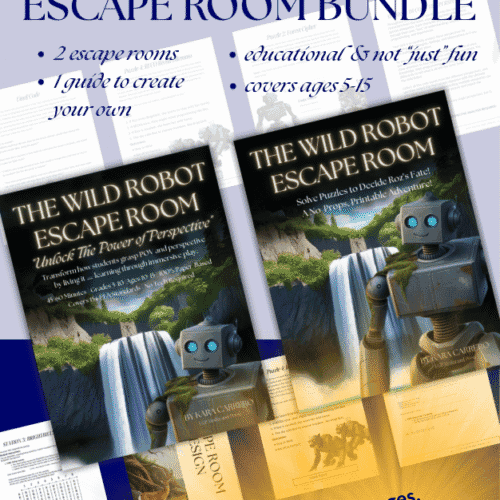
The Wild Robot Educational Escape Room Bundle (Ages 5-15)
Original price was: $14.00.$12.00Current price is: $12.00. -
Sale!
The Wild Robot Complete Immersive Experience & Analysis
Original price was: $29.00.$25.00Current price is: $25.00.
Reviews
There are no reviews yet.