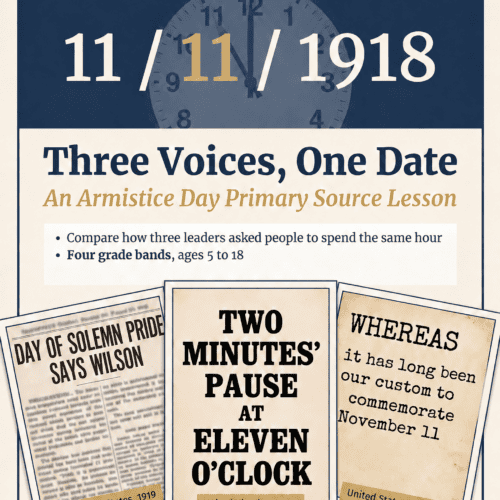
One date, one hour, three very different jobs. Students read primary sources from two presidents and a king to discover how the same moment that became the eleventh hour of the eleventh day of the eleventh month. Over time, 11:00 a.m. on November 11, has been changed to mean different things such as Veteran’s Day, Remembrance Day, and a day for poppies. A ready-to-print lesson for ages 5 to 18, with an answer key.
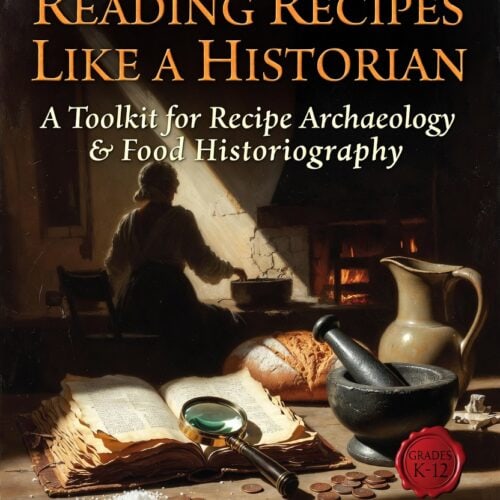
Teach sophisticated historical thinking through food historiography! This 106-page toolkit shows students grades K-12 how to analyze historical recipes as primary sources revealing economic pressure, daily realities, and the context behind historical decisions.
Includes complete theoretical framework, two ready-to-teach lesson plans (Colonial & Great Depression), grade-level adaptations K-12, student worksheets, assessment rubrics, and flexible implementation for classrooms, homeschools, and co-ops. Uses the Four Lenses framework (Economic, Technological, Social/Cultural, Policy) to develop critical thinking, primary source analysis, and evidence-based argumentation.
Transform your Industrial Revolution unit into an engaging historical mystery! Students solve authentic 1845 puzzles while exploring the tensions between traditional craftsmanship and industrial production in Lowell, Massachusetts. What’s Included: 4 interactive historical stations with authentic period challenges Student activity sheets with step-by-step guidance Teacher verification guide with answers and hints Student checklist for progress…
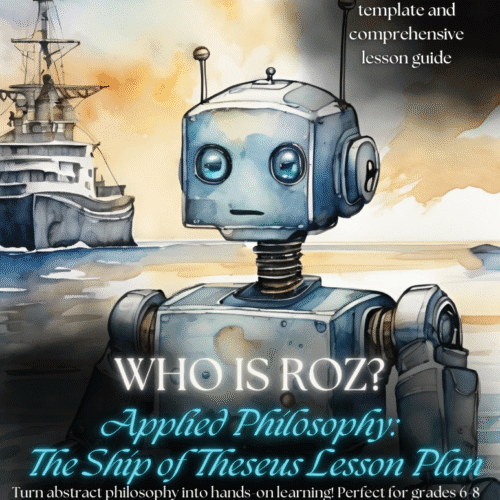
The Roz Reimagined: Mind & Machine Philosophy Project
Transform “The Wild Robot” into a philosophical adventure with this 9-page guide that makes complex thinking accessible and exciting for middle schoolers! Students will physically rebuild Roz piece by piece, tackling the ancient Ship of Theseus paradox while exploring mind-body dualism, identity, and consciousness.
This classroom-tested resource includes:
Ready-to-print robot template for hands-on manipulation
Complete lesson plan with step-by-step instructions
Engaging scenario questions for philosophical discussions
Identity mapping activity
Extension options for diverse learning environments
Assessment tools and reflection prompts
Optional cultural connections for cross-curricular exploration
Perfect for grades 6-8, this unique approach deepens novel comprehension while developing sophisticated thinking skills that extend far beyond literature. Watch your students light up as they debate: “If every part of Roz is replaced, is she still Roz?”
No philosophy background needed—just print and teach!
Your saved items live in this browser and clear eventually. Add your email to save them permanently to an account (and get notified if they go on sale).