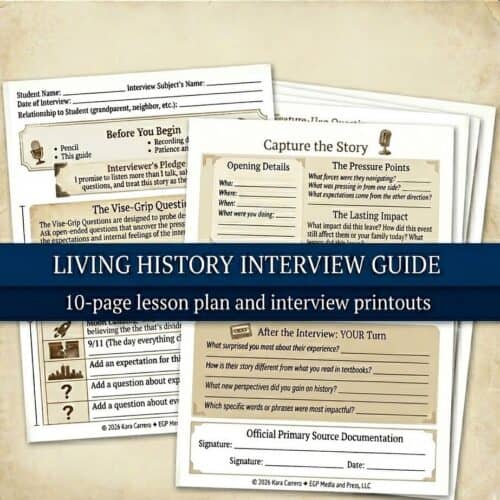
Send your student into a real conversation with history. This 10-page printable guide teaches students to ask specific questions, listen for the story beneath the story, and treat a family member’s memory as the primary source it actually is. Grab the free companion lesson plan for full differentiated assignments in grades K–12.
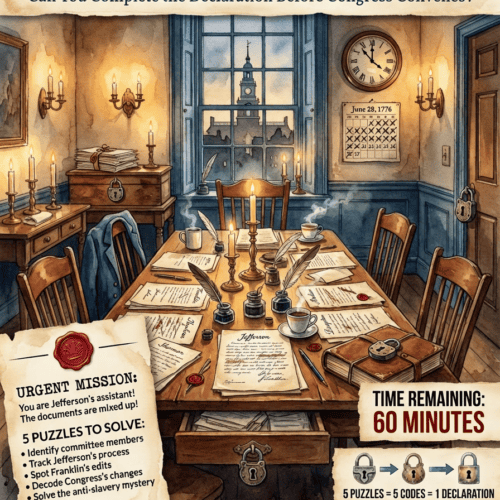
Your students are Jefferson’s assistants, and the documents are completely mixed up.
This print-and-play escape room takes grades 3-12 through five sequential puzzles covering the Committee of Five, Jefferson’s drafting process, Franklin’s famous edit, the real signing date, and the anti-slavery passage Congress removed. Five codes. One Declaration.
K-2 can join with a teacher or older student leading the way.
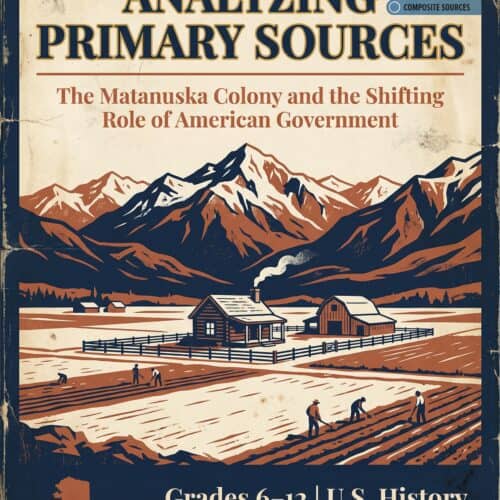
A 26-page primary source analysis unit exploring how the 1935 Matanuska Colony reflects the shifting role of American government, from Homestead-era individualism to New Deal federal intervention. Includes real, composite, and illustrative sources, each clearly labeled with full transparency notes and verified archive links. Built for grades 6–12.
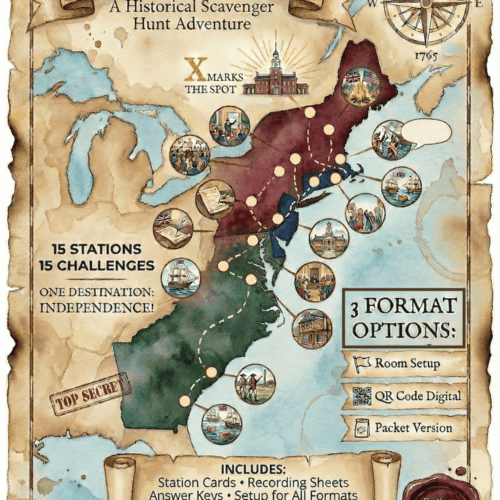
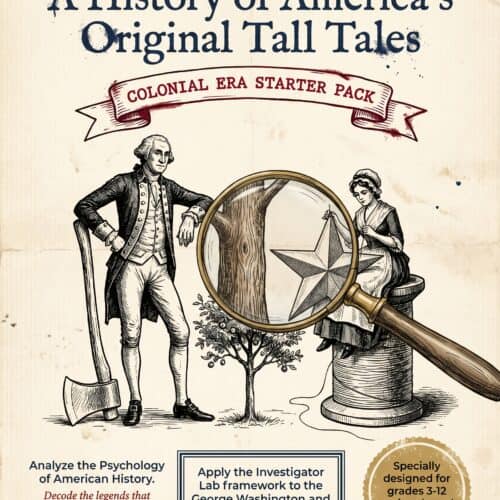
How did a series of tax laws become a revolution? This multi-format scavenger hunt, digital webquest, and self-paced packet traces 15 pivotal events from 1765 to 1776 using real primary source documents. Students collect a clue word at every station and assemble a famous Revolutionary-era quote at the end. Part of the Five Pillars of the Declaration of Independence framework. Grades 3-12.
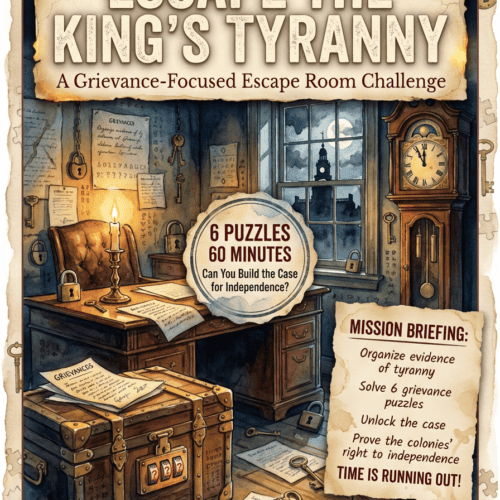
Students take on the role of a colonial aide with one mission: document six acts of tyranny and deliver the evidence to Congress before dawn. This no-prep, print-and-play paper escape room challenges grades 3-12 to work through six grievance-focused challenges and crack the final code. Part of the Five Pillars of the Declaration of Independence framework.
Did the signers of the Declaration really lose everything? Was Hancock’s famous signature actually an act of defiance? Did the signing even happen on July 4?
The answer to all three is more complicated than you think and more interesting.
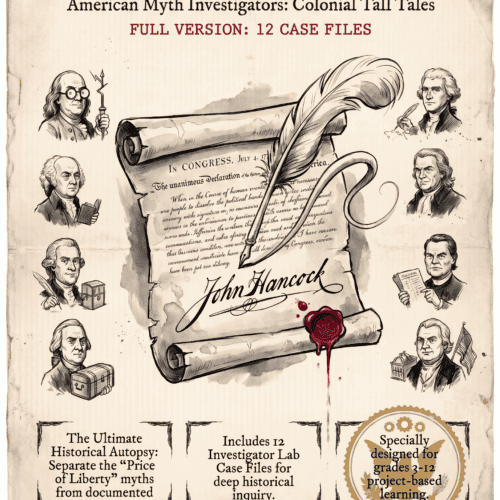
The Signers’ Sacrifice gives students 12 myth investigations, 3 investigative roles, and the most important question in historical thinking: why did we need this story to be bigger than the truth?
Grades 3–12. Print and go. Works for classrooms and homeschools.
Did the signers of the Declaration really lose everything? Was Hancock’s famous signature actually an act of defiance? Did the signing even happen on July 4?
The answer to all three is more complicated than you think and more interesting.
The Signers’ Sacrifice gives students 12 myth investigations, 3 investigative roles, and the most important question in historical thinking: why did we need this story to be bigger than the truth?
Grades 3–12. Print and go. Works for classrooms and homeschools.
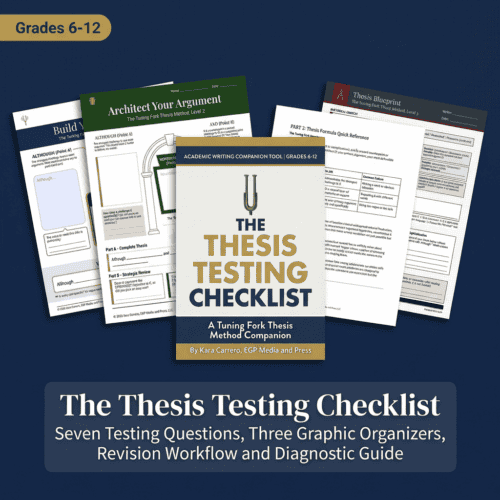
A 12-page companion tool for the Tuning Fork Thesis Method. Includes seven thesis testing questions with revision direction for each, the “Although A and B, nevertheless C” formula broken down with cross-subject examples, an announcement language guide, a step-by-step revision workflow, a quick diagnostic table, and three level-specific graphic organizers for Levels 1, 2, and 3. Works as a planning tool before drafting, a revision diagnostic, or a conferencing reference.
Your saved items live in this browser and clear eventually. Add your email to save them permanently to an account (and get notified if they go on sale).