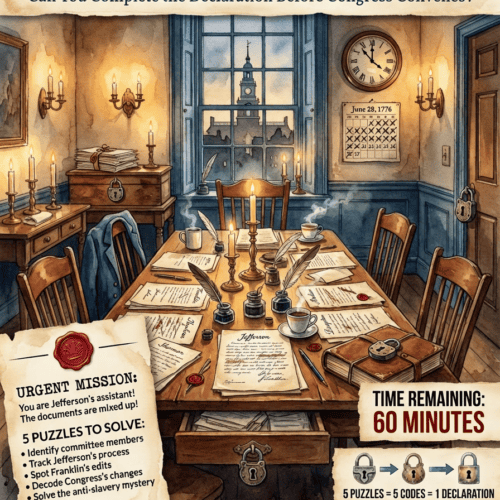
Your students are Jefferson’s assistants, and the documents are completely mixed up.
This print-and-play escape room takes grades 3-12 through five sequential puzzles covering the Committee of Five, Jefferson’s drafting process, Franklin’s famous edit, the real signing date, and the anti-slavery passage Congress removed. Five codes. One Declaration.
K-2 can join with a teacher or older student leading the way.
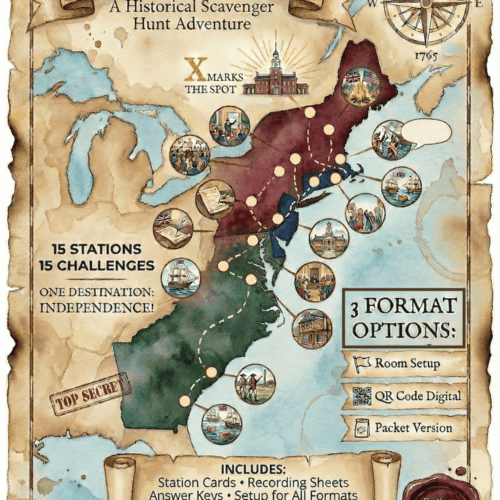
How did a series of tax laws become a revolution? This multi-format scavenger hunt, digital webquest, and self-paced packet traces 15 pivotal events from 1765 to 1776 using real primary source documents. Students collect a clue word at every station and assemble a famous Revolutionary-era quote at the end. Part of the Five Pillars of the Declaration of Independence framework. Grades 3-12.
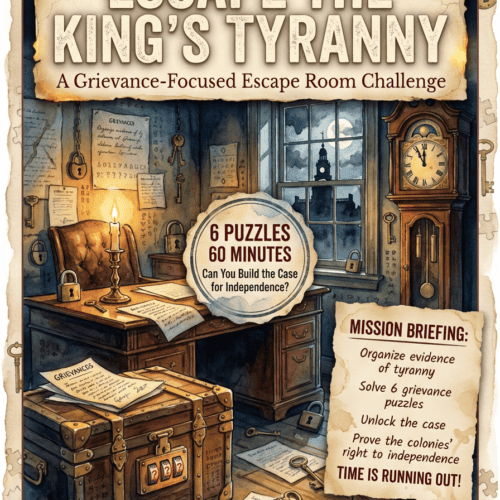
Students take on the role of a colonial aide with one mission: document six acts of tyranny and deliver the evidence to Congress before dawn. This no-prep, print-and-play paper escape room challenges grades 3-12 to work through six grievance-focused challenges and crack the final code. Part of the Five Pillars of the Declaration of Independence framework.
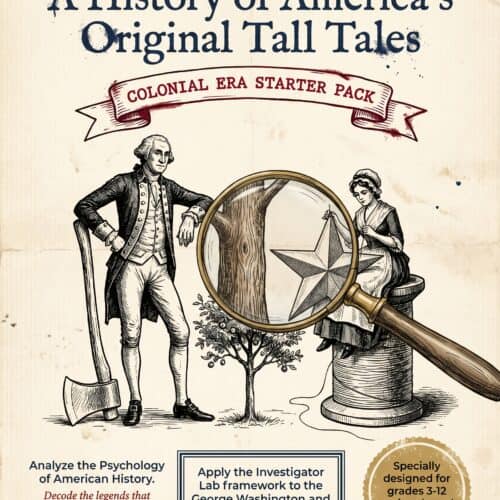
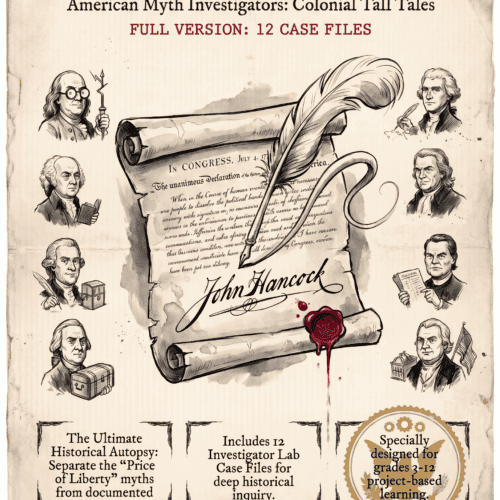
Did the signers of the Declaration really lose everything? Was Hancock’s famous signature actually an act of defiance? Did the signing even happen on July 4?
The answer to all three is more complicated than you think and more interesting.
The Signers’ Sacrifice gives students 12 myth investigations, 3 investigative roles, and the most important question in historical thinking: why did we need this story to be bigger than the truth?
Grades 3–12. Print and go. Works for classrooms and homeschools.
Did the signers of the Declaration really lose everything? Was Hancock’s famous signature actually an act of defiance? Did the signing even happen on July 4?
The answer to all three is more complicated than you think and more interesting.
The Signers’ Sacrifice gives students 12 myth investigations, 3 investigative roles, and the most important question in historical thinking: why did we need this story to be bigger than the truth?
Grades 3–12. Print and go. Works for classrooms and homeschools.
Transform a single afternoon into meaningful exploration of frontier friendship. Students analyze gift exchanges, research traditional plants, and build model snares to understand survival physics.
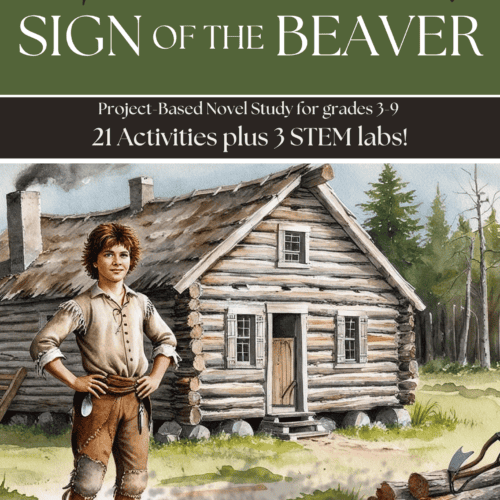
Transform The Sign of the Beaver into weeks of hands-on learning. Students assess survival skills, build working traps, investigate treaties, plan Indigenous gardens, and analyze cross-cultural friendship.
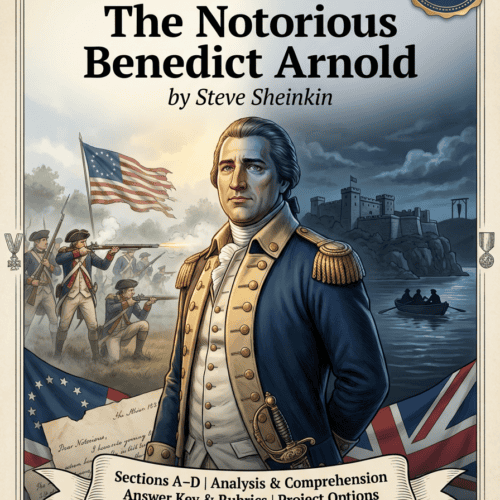
24-page companion guide for The Notorious Benedict Arnold by Steve Sheinkin. Includes differentiated analysis & comprehension worksheets (Grades 6-12), answer key, rubrics, and 2 project options. Perfect for homeschool, classroom, or book clubs exploring Revolutionary War history and moral complexity.
Your saved items live in this browser and clear eventually. Add your email to save them permanently to an account (and get notified if they go on sale).