
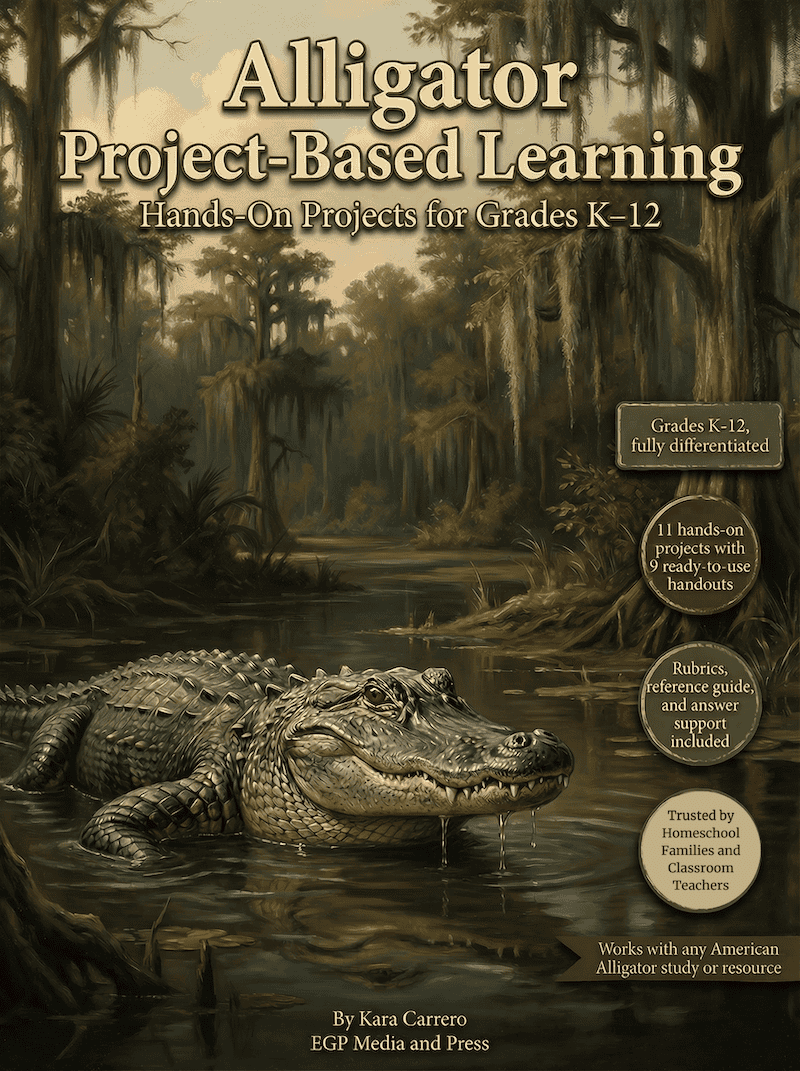
Built for the Wild:
The American Alligator
A complete project-based learning unit for the American Alligator, fully differentiated K–12, perfect for nature study, National Park Week, and exploring real wetland ecosystems from the Everglades to the Carolinas.
An Animal Worth Knowing
The American alligator is one of the most fascinating animals on the continent. Built for wetland life in ways that still surprise researchers, it anchors entire ecosystems across the American South, from the cypress swamps of Louisiana to the sawgrass marshes of southern Florida. Alligators are what ecologists call a keystone species: remove them, and entire food webs begin to collapse.
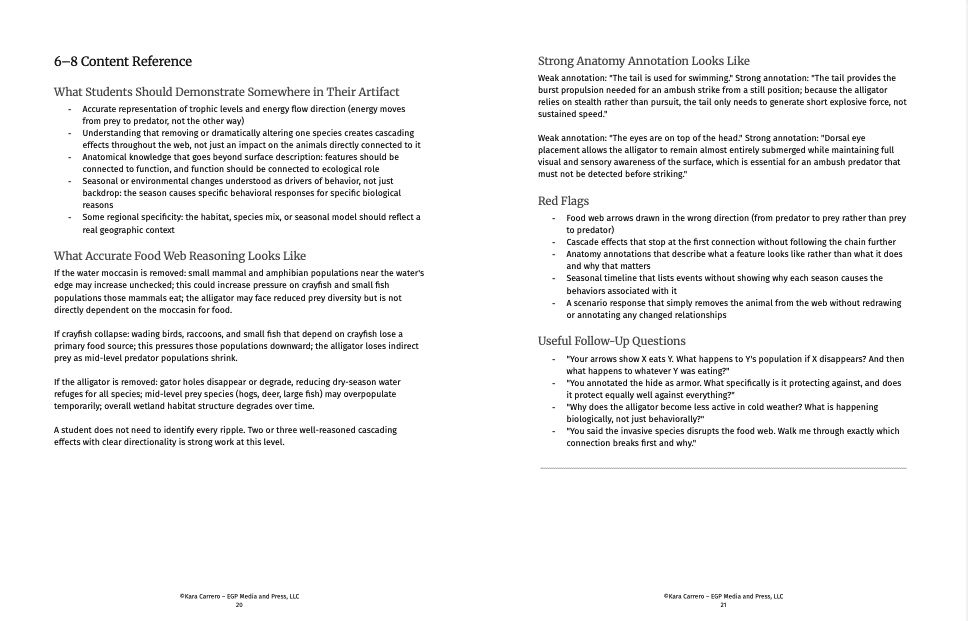
This project-based unit turns that biology into real thinking. Students don't fill in blanks about alligators. They rank survival dangers, design wetland habitat scenes, build food web collapse models, argue conservation cases, and engineer solutions to biomechanical challenges. Every project produces something a student can defend, not just submit.
Did you know that only 1 in 10 alligator hatchlings survives its first year, and that a baby gator faces more danger from a largemouth bass than from almost anything else in the swamp? That's the kind of detail that turns a science unit into a conversation that lasts all week.
What's Inside the Unit
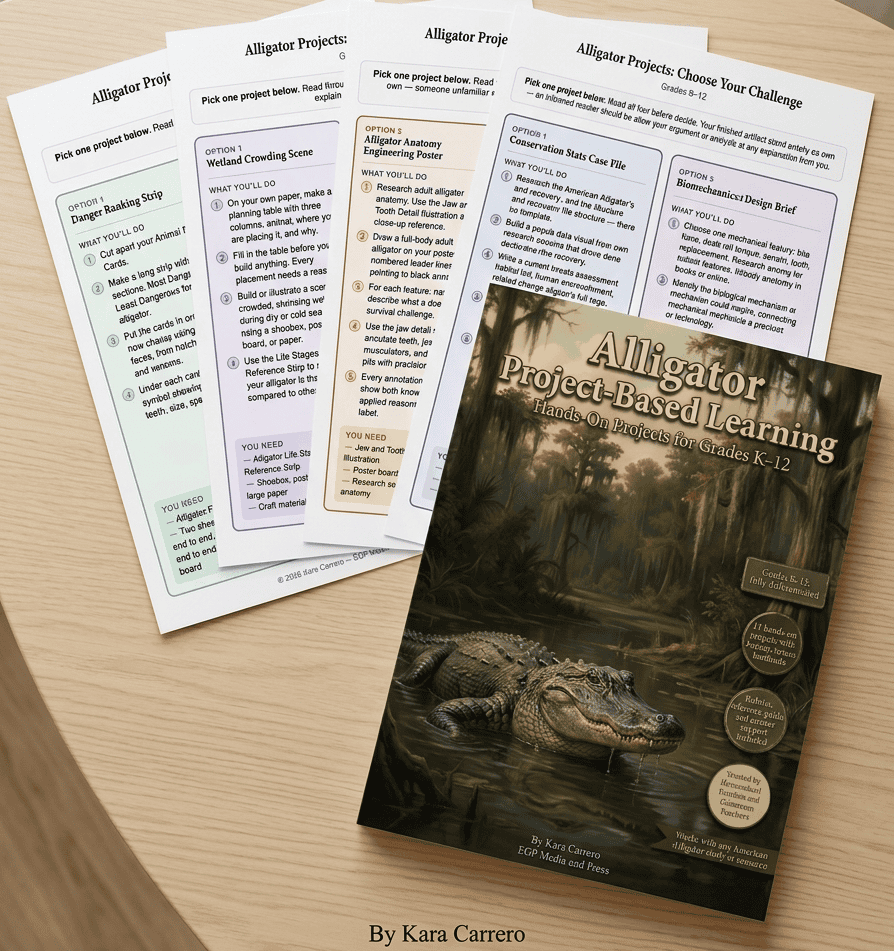
11 Student Projects Across 4 Grade Bands
K–2, 3–5, 6–8, and 9–12 projects are all included in a single resource. A kindergartner and a tenth grader can work from the same unit simultaneously, each producing work appropriate to their level.
9 Print-Ready Handouts
Includes animal picture cards, a wetland habitat map, a life stages reference strip, an anatomy poster, jaw and tooth illustrations, a food web base, and What-If scenario cards.
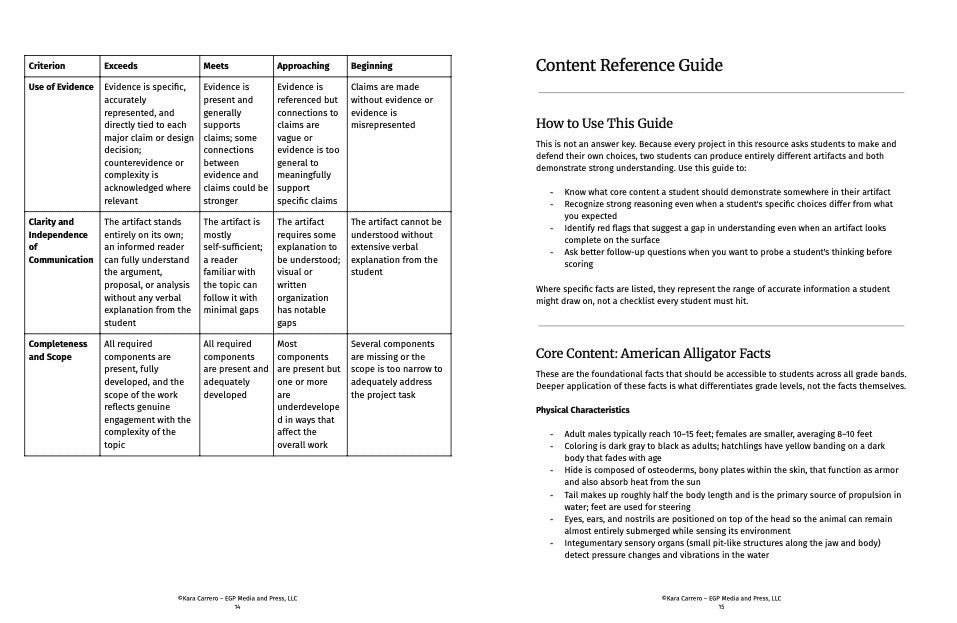
Grade-Band Rubrics
Rubrics for all four levels use descriptive performance language rather than point values, making it straightforward to assess both the work and the reasoning behind it.
Teacher and Parent Reference Guide
Core alligator facts, strong reasoning examples at each grade level, red flags to watch for, and follow-up questions for conferring with students after projects are complete.
Survival, Food Webs, and Conservation
Projects move through hatchling survival odds, wetland food web collapse, invasive species impacts, and conservation case-making, covering ecology from multiple angles.
No Specific Curriculum Required
Students can pair this with any book, documentary, nature journal, or online resource. The unit is designed to work with whatever research your student brings to it.
A Good Fit For...

Homeschool families doing spring nature study who want projects that go deeper than a worksheet and produce something a student actually made and can explain.

Multi-age households looking for one resource that serves every child at once, without having to track down separate versions for different grades.

Classroom teachers and co-ops looking for a hands-on science unit with built-in differentiation and assessment rubrics that doesn't require a specific textbook.

Any student curious about wildlife, wetlands, or ecology who is ready to move from reading about animals to actually thinking like a naturalist.
Want to Bring It to Life? Use It Before a Trip.
This unit stands completely on its own as a home or classroom science study. But if your family happens to have a trip planned to alligator country this spring or summer, working through it beforehand turns a day trip or vacation into something your students actually have context for.
Alligators live in wetland ecosystems across several states. Some families visit state parks, wildlife refuges, or national parks where alligators are common. Others take airboat tours or bayou excursions. Any of these experiences are richer when a student already knows what a keystone species does, what hatchling survival odds look like, and what a wetland food web actually contains.
This resource has no affiliation with the National Park Service or any park system. It is an independent educational unit you can use any time, any place, with any supplementary resources you choose.
The most famous alligator habitat in the country, where alligators and crocodiles are both present. A natural fit for studying the food web and keystone species projects in this unit.
Old-growth bottomland hardwood forest with boardwalk trails. Alligators share these flooded lowlands with deer, otters, and river turtles.
Airboat tours and bayou preserves throughout southern Louisiana offer some of the most accessible alligator encounters in the country.
Alligators range from eastern Texas through the Carolinas. State parks, wildlife refuges, and nature preserves throughout this region offer wildlife viewing opportunities.